Home › Services › Restaurant & cafe drain jetting
Your Kitchen Line Is Not Clogged. It Is Coated. — Jetting for Restaurants, Cafes and Shared Building Lines
If you run a kitchen in Seoul and the floor trench or the dish sink stops draining every few weeks, you do not have a clog problem — you have a layer of cooled fat on the pipe wall that a cable only pokes through. This page is restaurant drain cleaning explained for the operator: where the deposit sits, what a jetting visit actually does, how we set a cleaning interval, and where our job ends and the grease-trap hauler's begins.
Home kitchen, not a business? A villa or apartment sink that drains slowly is a different job and a smaller one — see kitchen sink clog. Building owner with a shared main that backs up into ground-floor units? That is sewer & drain jetting.
Who this page is for: operators, not homeowners
- Itaewon and HBC bars and burger kitchens in converted villas — a domestic-size drain line carrying commercial fryer volume, usually shared with the apartment upstairs
- Yeonnam and Hongdae cafes — coffee grounds and milk-steamer rinse water in a line that was laid for a house, often through a courtyard trench
- Hannam and Seorae bistros — leased ground floors of newer buildings with a grease interceptor the landlord installed and nobody has opened since
- Gangnam basement food courts and franchise units — long horizontal runs to a shared riser, a management office in the loop, and head office asking for maintenance records
- Guesthouse and serviced-residence kitchens where a dozen guests cook in the same sink and the manager is the one who gets the complaint
Why a restaurant line fouls in months, not years
A household sink line takes a decade to narrow. A kitchen line does it in a season, and each ingredient behaves differently inside the pipe.
Cooled fat
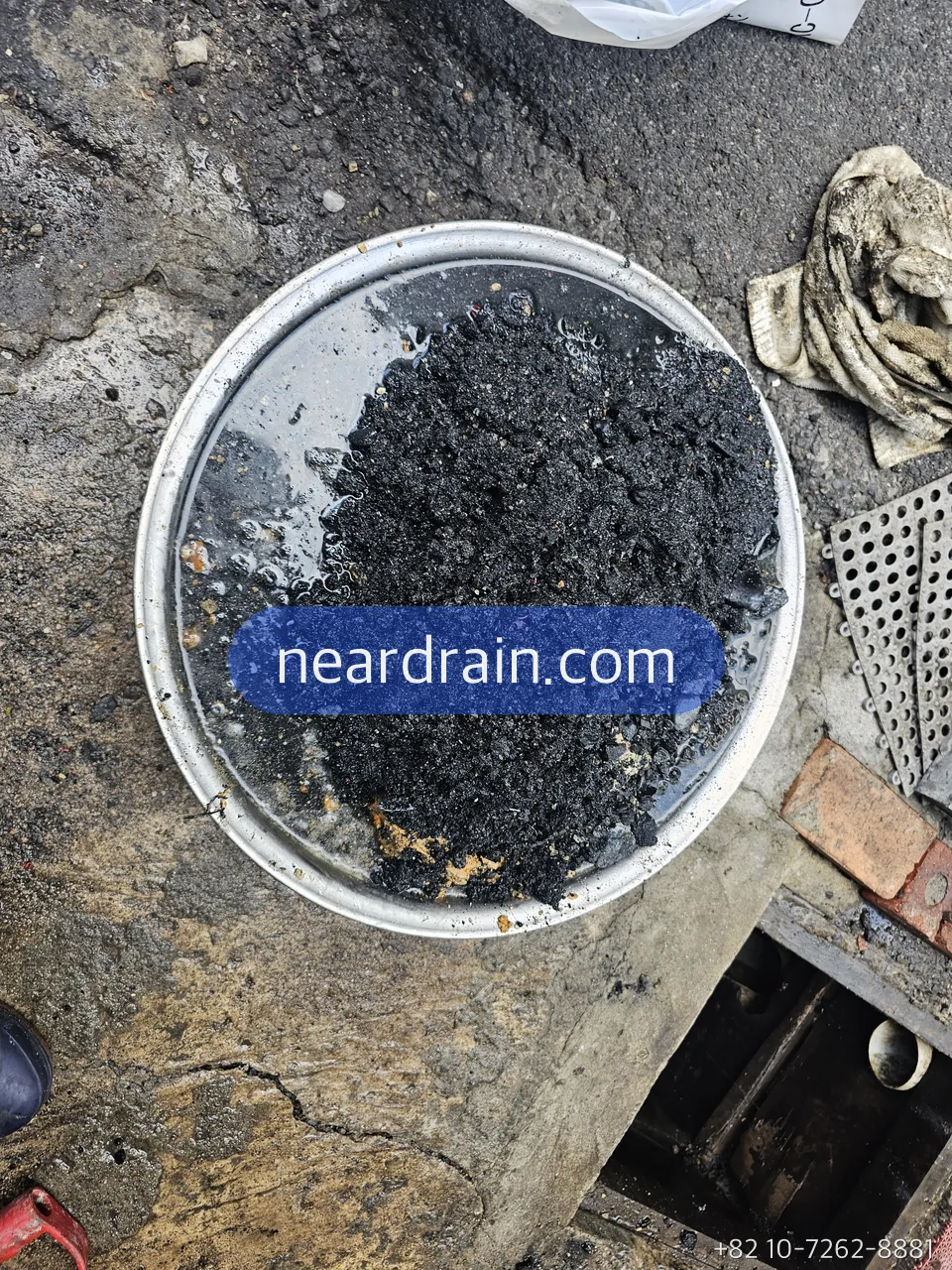
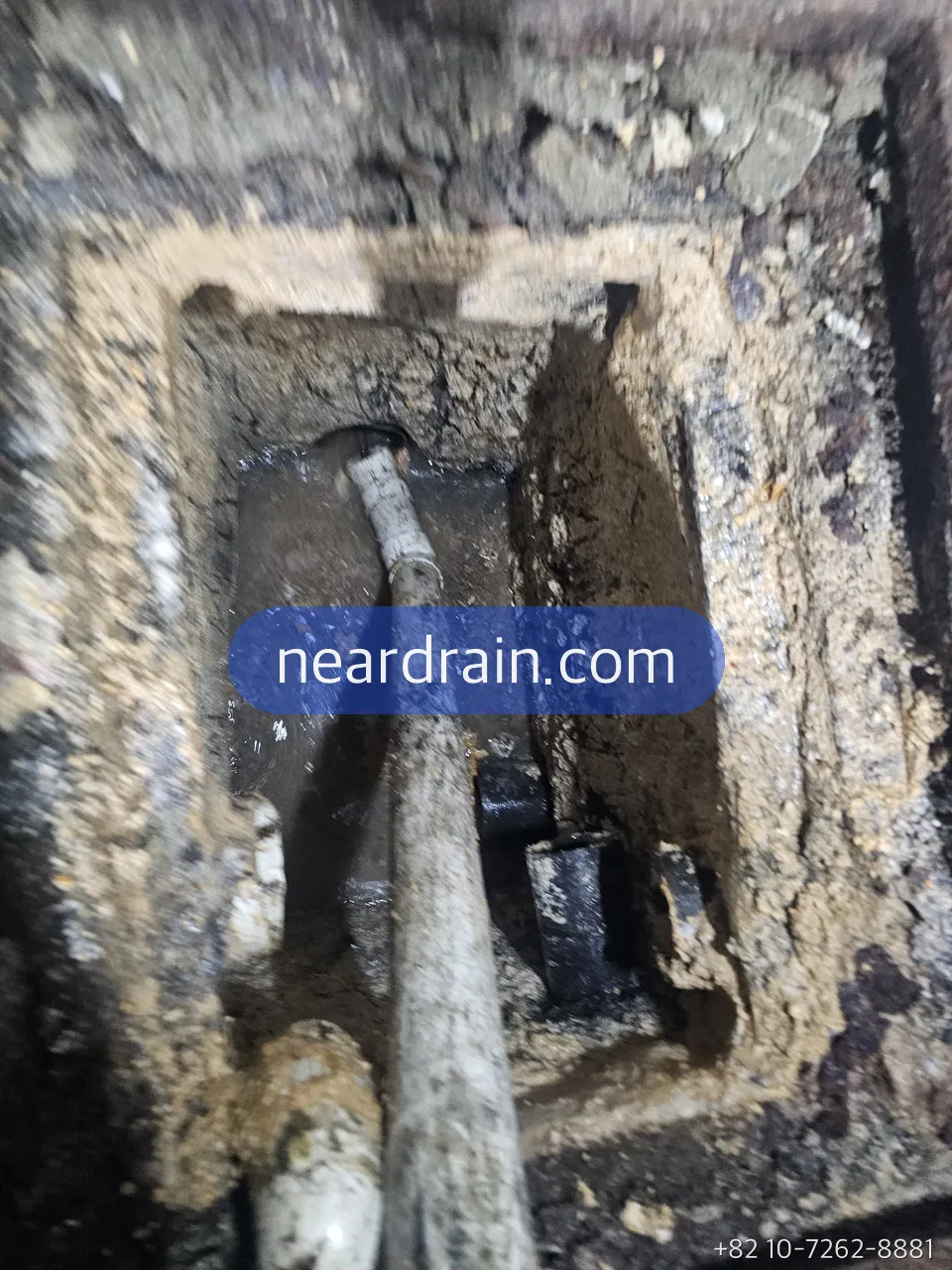
Fryer oil and meat fat leave the sink at 60 °C and hit a pipe at 15 °C within a metre. They set on the wall in rings, thickest at every bend and at the first flat section. Hot water down the sink moves the ring a metre further and sets it again.
Rice starch and flour
Rinse water from rice, noodle and batter prep carries starch that gels onto the fat ring and hardens into something closer to plaster than grease. This is the layer that a cable machine bounces off.
Coffee grounds and milk
Grounds do not dissolve; they settle in the trench and in any low point of the run and pack together with milk-fat film. Cafe lines block at the bottom of the pipe first, not around the wall.
Dishwasher detergent film
Commercial rinse aid and detergent leave a slick that binds fat, hair from mop water and food fibre into a single sheet. It is why a line that "only takes dishwater" still fouls.
Where the deposit sits — from the sink to the street
A restaurant drain is five sections in series. Each one fouls differently and is quoted separately, which is why we name the section on the quote.
1 · Sink trap and tail
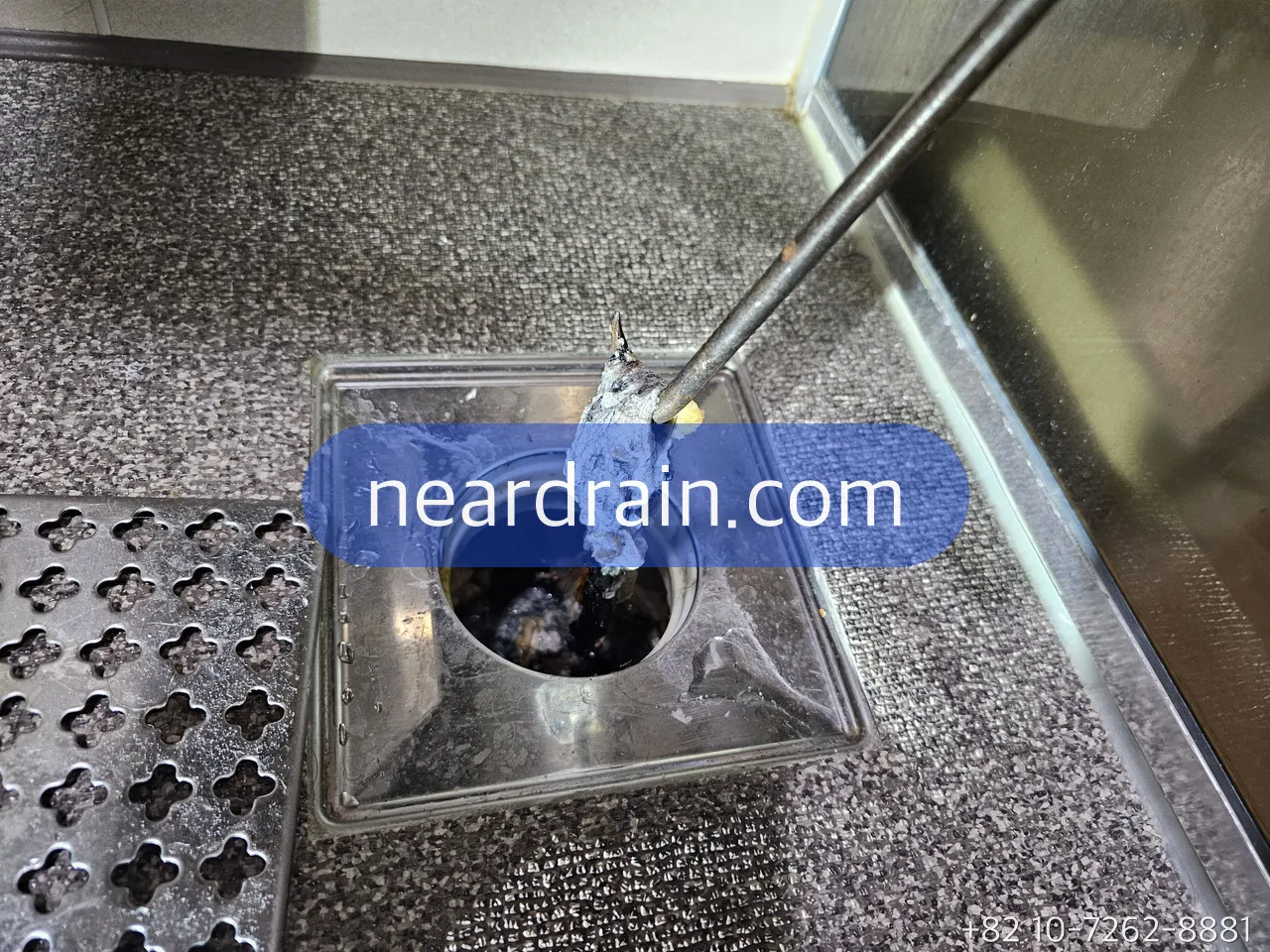
The first bend under the dish sink. Fat sets here fastest. Cleared by hand or small cable; jetting alone is overkill for this section.
2 · Floor trench (트렌치)
The long grated channel across the kitchen floor. Grounds, fat and food fibre pack in the channel and at its single outlet. Lift the grate and you usually see the whole problem.
3 · Grease interceptor
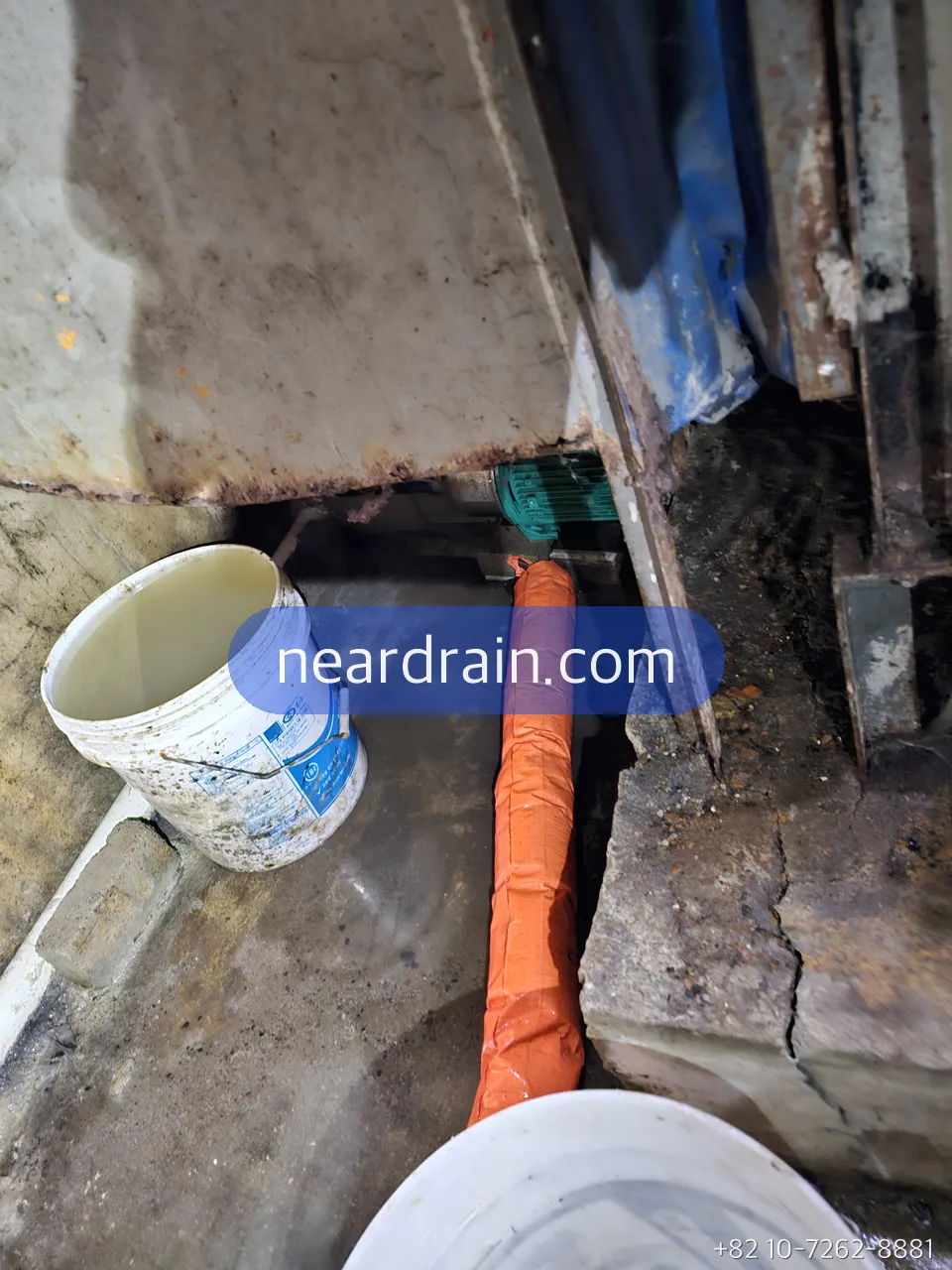
The box between the kitchen and the building line, if you have one. Its inlet and outlet pipes are ours to clean; its contents are the licensed hauler's.
4 · Horizontal main (횡주관)
The flat run under the floor or along the basement ceiling to the riser. Long, flat and slow — this is where jetting earns its keep and where most repeat backups live.
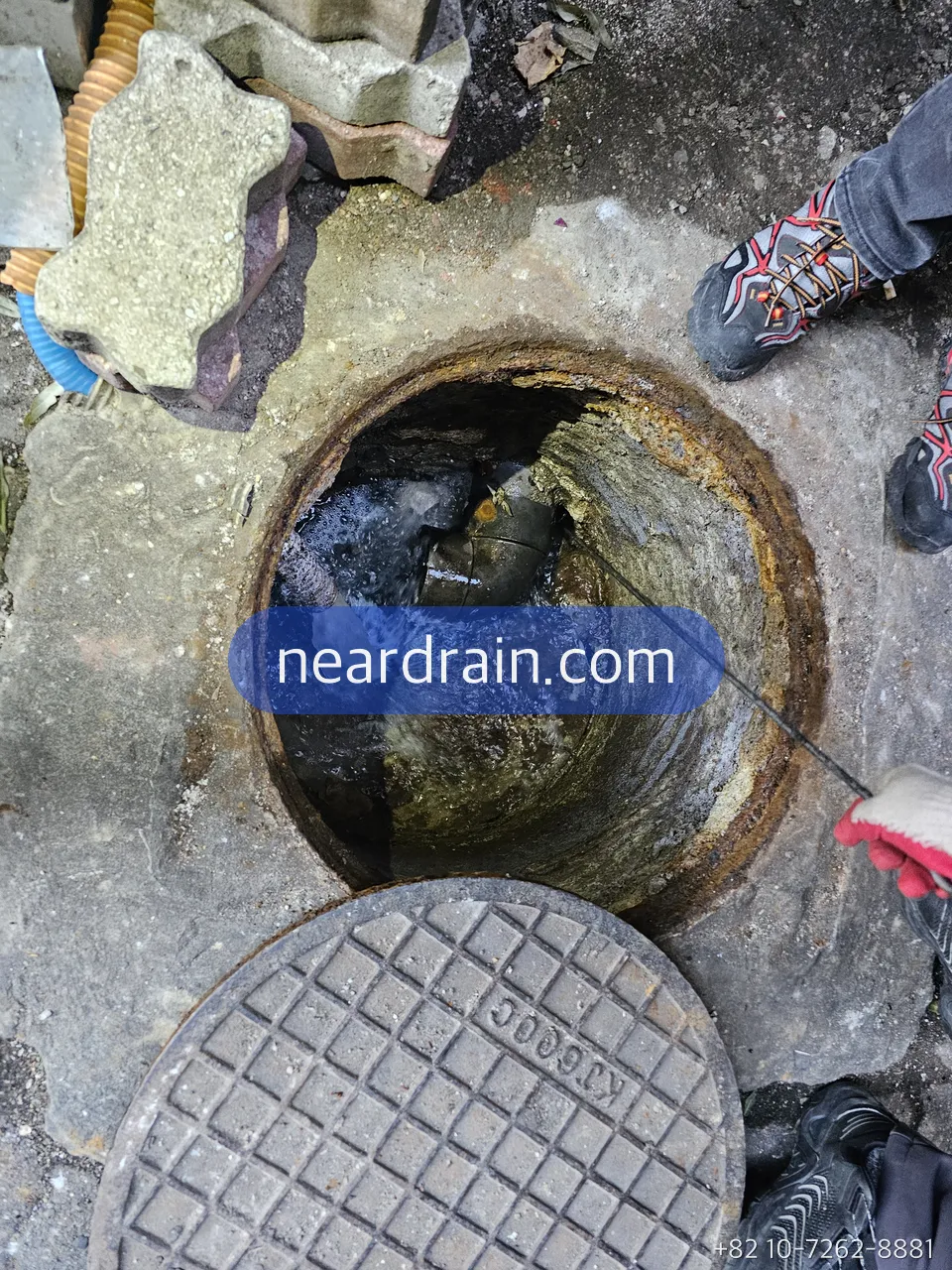
5 · Riser and street manhole (입상관 · 맨홀)
The vertical pipe and the last run to the public sewer. Shared with everyone in the building; usually the landlord's line, always the one that decides who gets flooded first.
What we do on a jetting visit, in order
1 · Scope with the camera
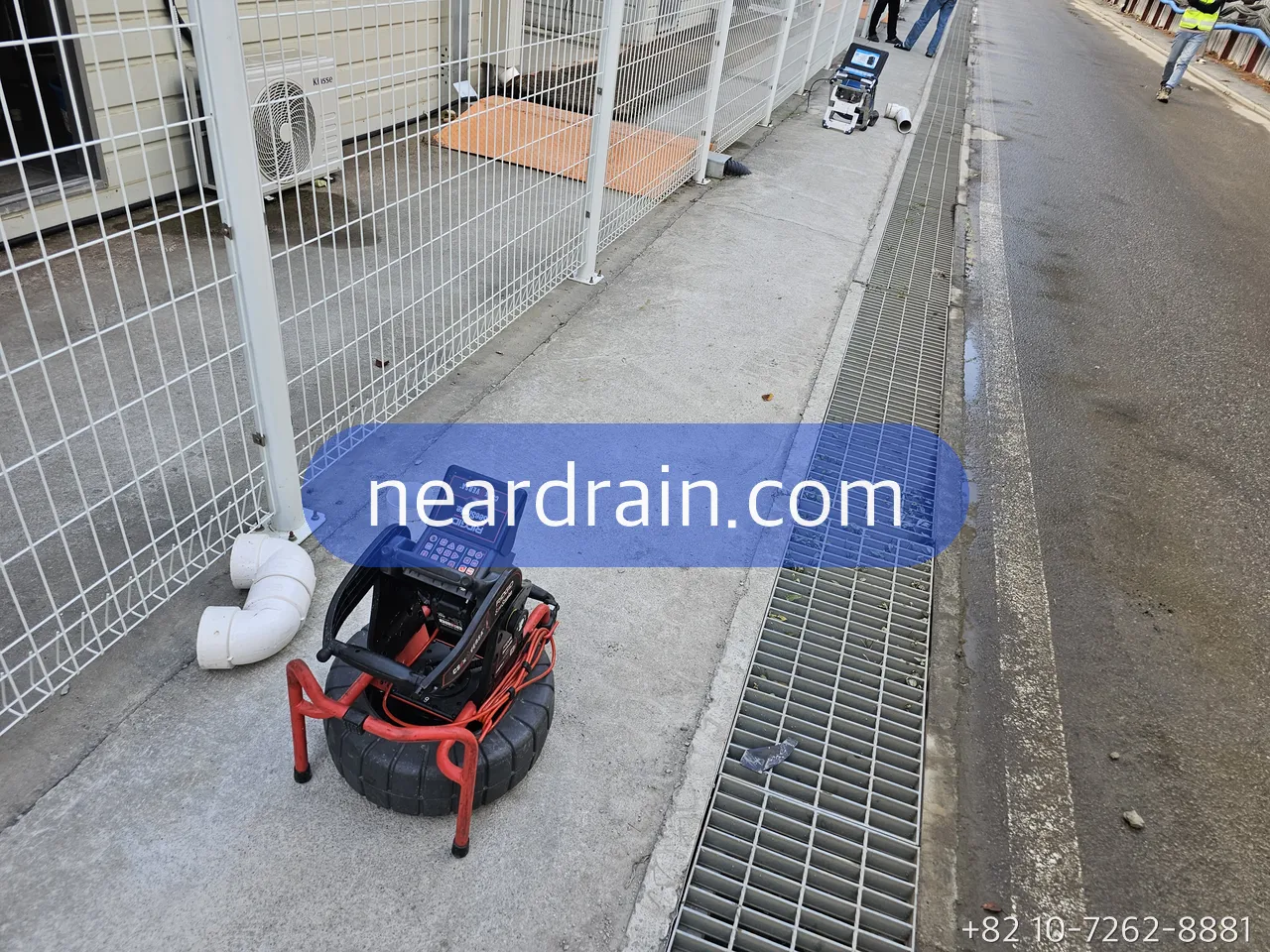
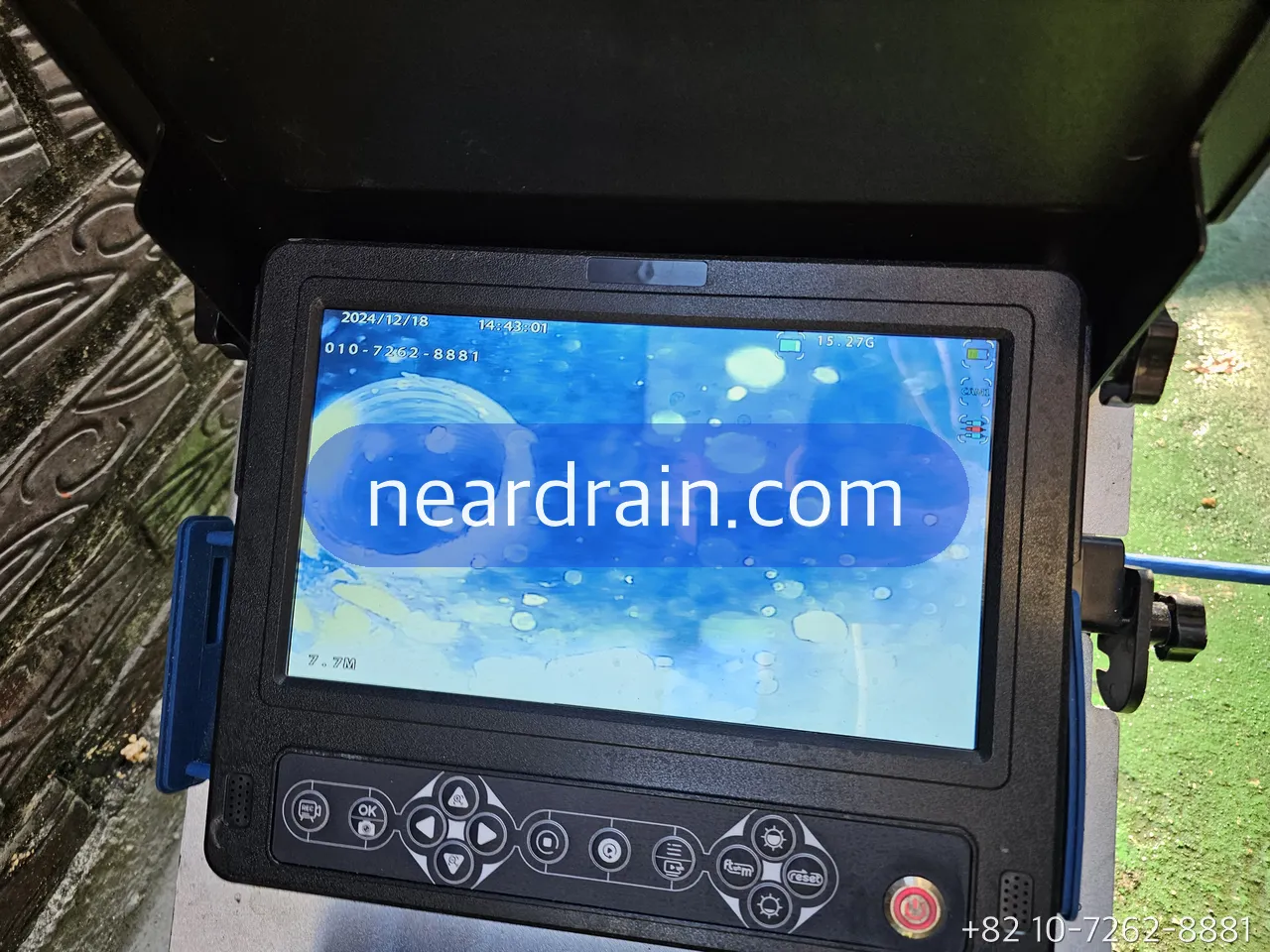
We open the trench and the nearest cleanout and run a camera to see which sections are coated, where the flat spots are, and whether there is a broken or bellied pipe that jetting will not fix. You watch the screen with us.
2 · Quote by section
Quoted per section after a camera look: pipe diameter, run length, access points, and how long since the last real cleaning. Scheduled intervals lower the per-visit figure. You approve the figure and the VAT-included total before the pump starts. If we find the main is the real problem and it is the landlord's, we stop and say so before spending your money on it.
3 · Jet each section from the downstream end
The nozzle goes in at the manhole or cleanout and is pulled back toward the kitchen, so loosened fat travels toward the street, not back into your trench. Water only — no solvents or caustic into a line that feeds a shared sewer.
4 · Camera again, photos for your file
A second pass shows clean wall. You get the stills, the sections named, the date, and a note on what interval the line will need. Grate back on, floor rinsed, kitchen handed back.
Jetting, descaling, or "cleaning"? What each word means on our quote
Jetting (고압세척)
High-pressure water through a rear-facing nozzle, pulled along the section, stripping soft deposit — fat, starch, detergent film — off the full circumference. The line item on almost every restaurant quote.
Descaling (스케일링)
Pre-2000 buildings in Itaewon, HBC and Yeonnam often have cast-iron or steel mains carrying hard lime scale (석회) and rust (녹) under the grease. Water polishes it; a chain or rotary head is needed, takes longer, and is quoted as its own step after the camera shows it.
"Cleaning" (배관청소) with no section named
If a competing quote says "pipe cleaning" without saying which section, by what method, from which access point — ask. Ours names all three, so you can compare like with like and show the landlord what was actually done.
Scheduled cleaning: the interval comes from your line, not a calendar
After the first jetting we know two things: how thick the deposit was and how long it took to get there. A fried-chicken kitchen sharing a villa line may need a pass every three months; a cafe on a newer PVC run may be fine at twelve. We propose the interval from the camera evidence, put it in writing, and text you a reminder before each pass. On a scheduled interval the per-visit figure is lower than a one-off call, the visit is booked outside service hours by default, and every pass adds a dated photo to your maintenance record — the thing a landlord, a franchise office or a health inspector actually asks for.
No long contract is required. The interval is a standing reminder you can move or cancel by text; the price advantage applies as long as the line is on a regular schedule.
Boundaries — what is not this job
- Grease trap pump-out and waste haul (폐유 처리): licensed waste collectors only. We clean the pipes either side and tell you when the trap is full.
- The building's shared main below your lease line: we will jet it if the owner books it — and we will tell you when the problem is there rather than in your kitchen, so you do not pay for the landlord's pipe.
- Septic tank emptying (정화조 청소): a licensed septic hauler's job, not ours.
- Health-inspection paperwork: we provide the dated photos and invoice; filing and compliance are yours.
- Broken or bellied pipe under the floor: jetting cannot fix a pipe that has sagged or cracked. The camera shows it; we explain the options on site and who does which part.
Price
Fixed quote on site · VAT 10% separate
Quoted per section after a camera look: pipe diameter, run length, access points, and how long since the last real cleaning. Scheduled intervals lower the per-visit figure.
- Fixed quote before work starts — you agree to the number first. If the scope turns out to be different mid-job, we stop and explain before anything continues.
- Card payment accepted. Cash receipt or corporate tax invoice (세금계산서) issued on request.
- VAT 10% is quoted separately, and we tell you the VAT-included total before starting.
What moves the number, in plain terms
- Pipe diameter — a 50 mm sink line and a 150 mm building main need different nozzles and different time
- Run length and number of sections — trench only, or trench plus main to the manhole
- Access points — an outdoor manhole and a cleanout make it quick; no cleanout means opening a fitting first
- Time since the last real cleaning — a line jetted last year strips in one pass; a line poked with cables for five years may need descaling as well
- Out-of-hours booking — early and late slots are how restaurants are normally scheduled; we confirm the slot and the figure together before the visit
Questions restaurant operators ask
The landlord says the shared main is my problem because my kitchen caused it — is it?
Sometimes partly, rarely entirely. A Korean commercial lease usually makes the tenant responsible for the line inside the unit up to the point where it joins the building main; the horizontal main (횡주관) and riser (입상관) are the building's. What settles the argument is the camera footage: if the grease layer stops at your tie-in, the conversation is short. If it runs the length of the main, other kitchens and years of neglect are in the picture too. We give you the footage and a short written note in Korean and English so you are negotiating with evidence, not accusations.
Can you come before opening hours or after close so we do not shut the kitchen?
That is how most restaurant jetting is booked. Early morning before prep, or after the last table clears, are the usual windows; the jetting unit sits outside at the manhole or cleanout, so the dining room stays clean. Tell us your opening time and the day your kitchen is quietest, and we schedule around it. What we cannot do is jet while the dishwasher and sinks are running — the line needs to be empty of live flow for the nozzle to work.
We already had someone "unclog" it last month. Why is it back?
A cable machine drills a hole through the grease plug and restores flow that night. It does not remove the coating on the pipe wall, so the hole closes again as soon as the next week of fryer oil cools inside it. On a restaurant line the coating is the problem; the plug is only the symptom. Jetting strips the wall along the whole quoted section, which is why the interval between calls stretches from weeks to months.
Do you handle the grease trap (그리스트랩) itself?
We clean the drain lines on both sides of it and we tell you when the trap is the bottleneck. Pumping out and hauling away the trap contents is regulated waste handling (폐유 처리) done by licensed collectors, and we are not one. If your trap is overdue we say so and you book the haul-out; we can jet the line the same day the trap is emptied, which is the ideal order.
What do I get afterward for my landlord or the franchise office?
Before-and-after camera stills of each section we jetted, the date, the sections named (sink line, trench, tie-in, main to manhole), and a corporate tax invoice (세금계산서) if you need one for the books. Franchise operators often forward this to head office as proof of maintenance; landlords use it to decide whether the building main needs its own service.
Related reading
Who pays for plumbing repairs in Korea — landlord or tenant?
How to call a plumber in Korea (when you don't speak Korean)
Why your Korean bathroom smells like a sewer — how to find the cause, in order
English by text (SMS) works best. Phone calls are fine in Korean or Japanese. Japanese-speaking owners: 日本語のページ.
From restaurant jobs we have done
No stock photos on this site — every image below was taken by our crew on a real call.