Home › Guides › Unclog a Korean toilet
How to unclog a Korean toilet yourself — and the three signs to stop and call
Most searches for "how to unclog a Korean toilet" end at a video of someone with the wrong plunger. This is the version from the crew that gets called when the plunger fails: the order that works on a Korean bowl, which of the two Daiso plungers to buy, what the sticker really does, and — more useful than any of it — the three signs that mean stop, because the next push makes our job harder and your bill bigger.
Before anything: stop flushing, close the angle valve, lift the tank lid
The first flush after a clog is the one that puts water on the floor, and in a Korean wet-room bathroom that water runs to the floor drain and sometimes through it to the unit below. So: hands off the button. Reach behind the toilet and turn the chrome angle valve clockwise until it stops; now the tank cannot refill and the bowl cannot overflow no matter what you do next. Then lift the tank lid and look at the bowl water level. It tells you the type of clog before you touch a tool:
- Water high in the bowl, slowly dropping over ten minutes — paper or waste, partial, plunger territory.
- Water high and not moving at all — something solid, or a full block. Plunger may work; sticker will not.
- Water low, below the normal line, and the bathroom floor drain gurgles when you pour water in the basin — the block is past the toilet in the building line. Nothing in this guide fixes that; skip to the three signs.
The Korean plunger (뚫어뻥): bellows vs flange, and where to buy one
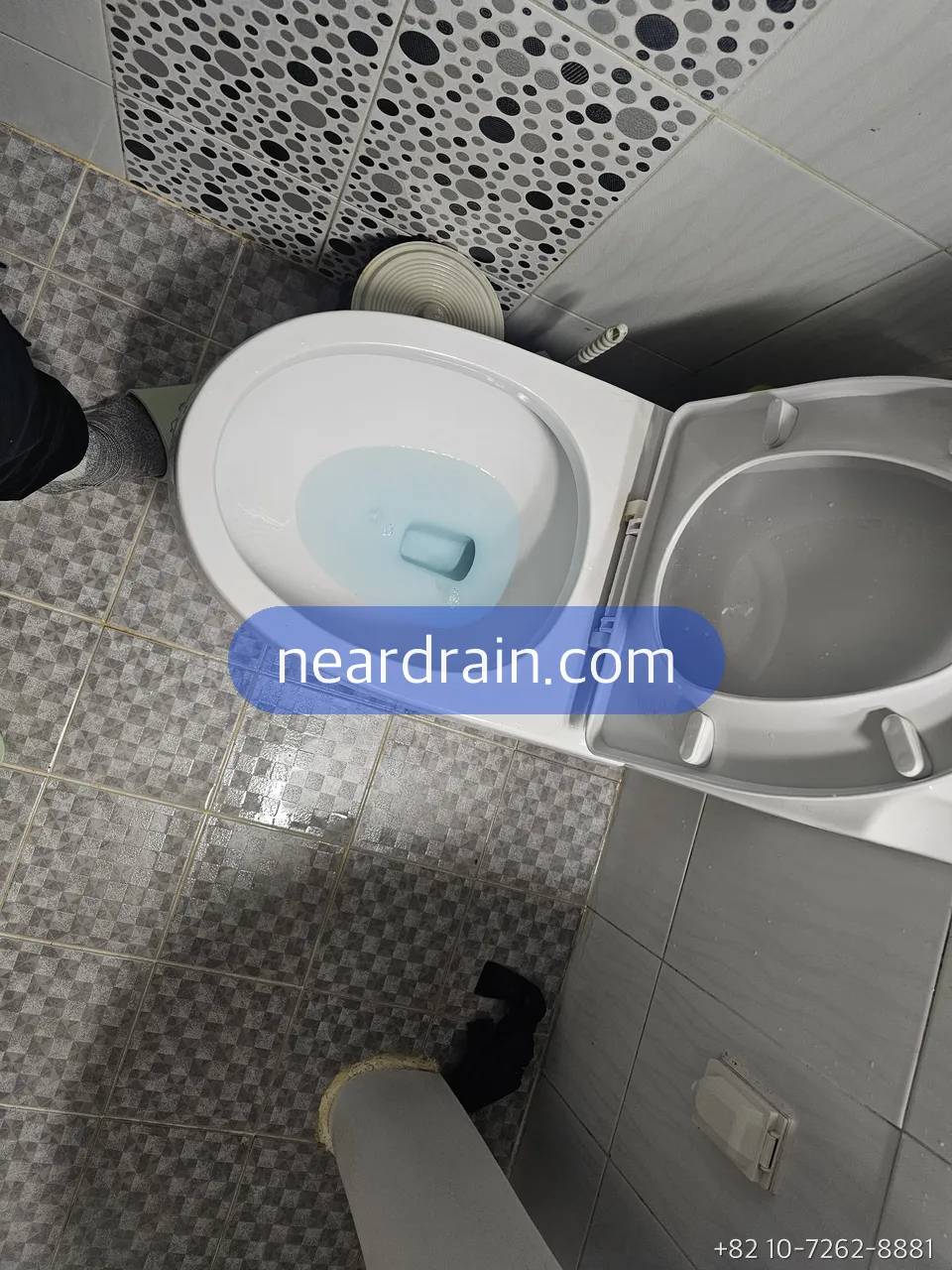
Daiso, convenience stores and the local hardware shop (철물점) sell two things called 뚫어뻥. The orange or black plastic bellows type is an accordion cylinder on a handle: it moves a lot of water in one push, seals badly on the oval Korean bowl, and is the one most people own. The rubber flange type has a soft lip that folds out under the cup; it seals against the trapway opening and moves water with force instead of volume. Buy the flange type. The technique that works on Korean bowls: fold the flange out, seat it over the outlet at the bottom of the bowl, push down slowly to expel the air, then work it in short sharp strokes — a dozen, then check the level. Keep enough water in the bowl to cover the cup; if the level has dropped below it, add a jug of water before the next round. Two rounds without the level changing is your answer, not a reason for a third.
The sticker (뽕투): how it actually works, when it helps, when it wastes twenty minutes
The pink sheet you see on TikTok is a large adhesive film stuck across the rim of the bowl. You flush — with the film sealed, the rising water has nowhere to go, so the film domes up; you then press the dome down and the whole column of water is forced into the trapway. It is a plunger without the plunger, and it genuinely works on soft paper clogs in a bowl that still drains slowly. It does nothing for a solid object, nothing for a block beyond the toilet, and nothing if the rim is wet or greasy enough that the seal lifts. It also requires you to flush, which is exactly the thing we just told you not to do — so use it only when the level is dropping on its own and you are sure the tank will not overflow the bowl. One sticker, one attempt; if the dome does not push through, peel it and move on.
Warm water and dish soap for paper clogs — and what never to pour
For a paper clog that is dropping slowly, a squirt of dish soap followed by a bucket of warm (not boiling) water poured from waist height often does what the plunger could not: the soap lubricates, the weight of the column pushes. Wait fifteen minutes and try a single flush with the angle valve still closed so the tank cannot refill. Two things never go in a Korean toilet: boiling water, which cracks the vitreous bowl and the wax seal under it, and chemical drain openers, which do not dissolve a compacted plug, sit in the bowl as a caustic soup, and make the toilet hazardous for whoever works on it next — including you when you plunge and it splashes.
Why Korean toilets clog differently
Three things about Seoul plumbing explain why the toilet in your Yeonnam or HBC villa blocks more than the one you grew up with. Older villas have narrower trapways and cast-iron branch lines with fifty years of scale inside, so the opening the waste has to pass is smaller than the bowl suggests. Newer apartments use low-flow dual flush (대/소) — the 소 button moves very little water, and habitually using it for paper leaves a plug halfway down. And the history: for decades paper went in the wastebasket beside the toilet, buildings were plumbed on that assumption, and the habit is now colliding with a generation that flushes, plus a product the old pipes never met at all — wet wipes, which do not break down and knit into a rope with hair and floss. If your bathroom has a bin by the toilet, someone put it there for a reason worth respecting.
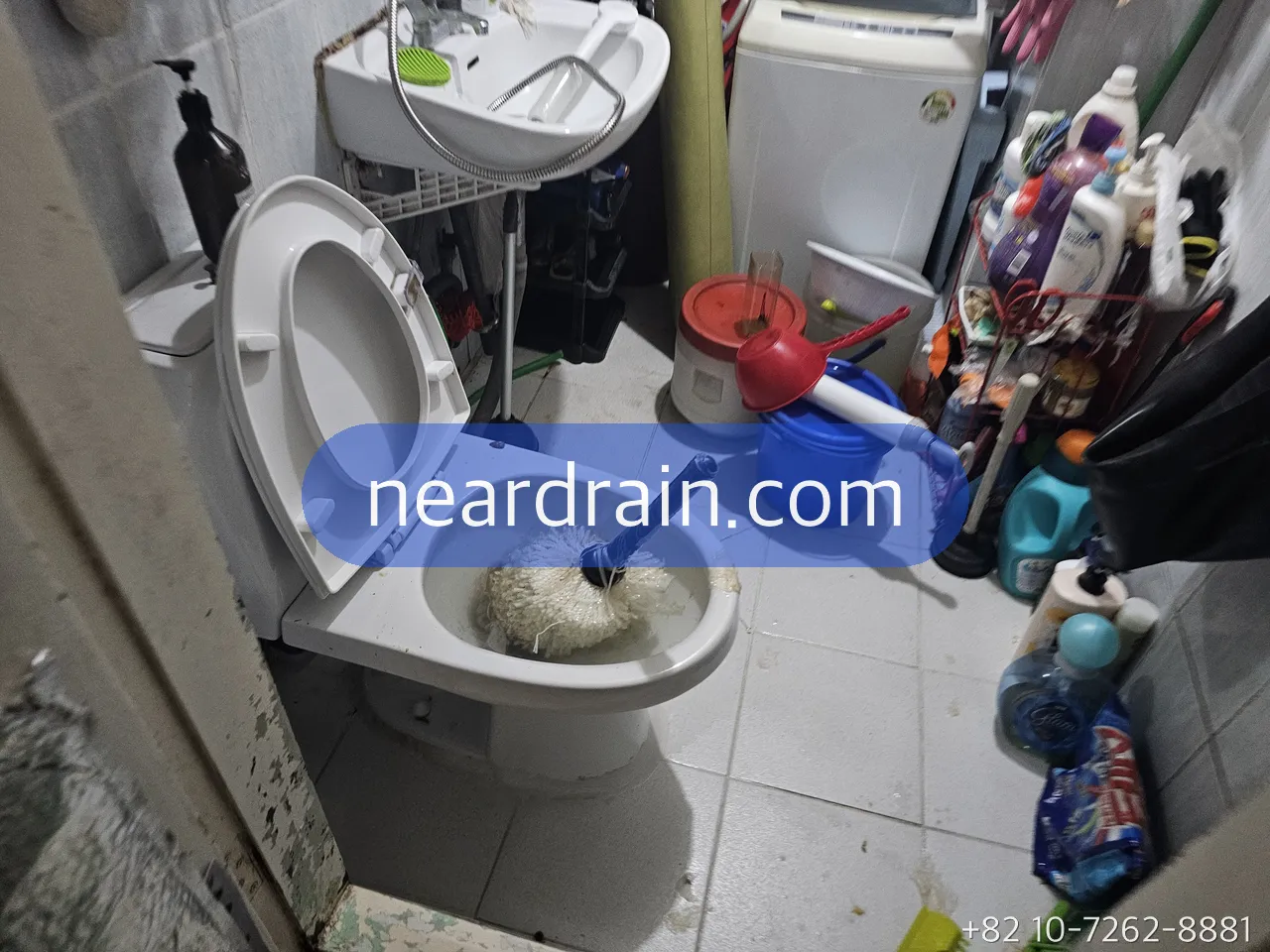
The three signs to stop and call
- Water rises in the shower or floor drain too. The block is not in the toilet, it is in the building's horizontal line, and every neighbour above you is adding to it. Plunging pushes it further along. This is a machine job from a cleanout, and in an apartment the management office needs to know today.
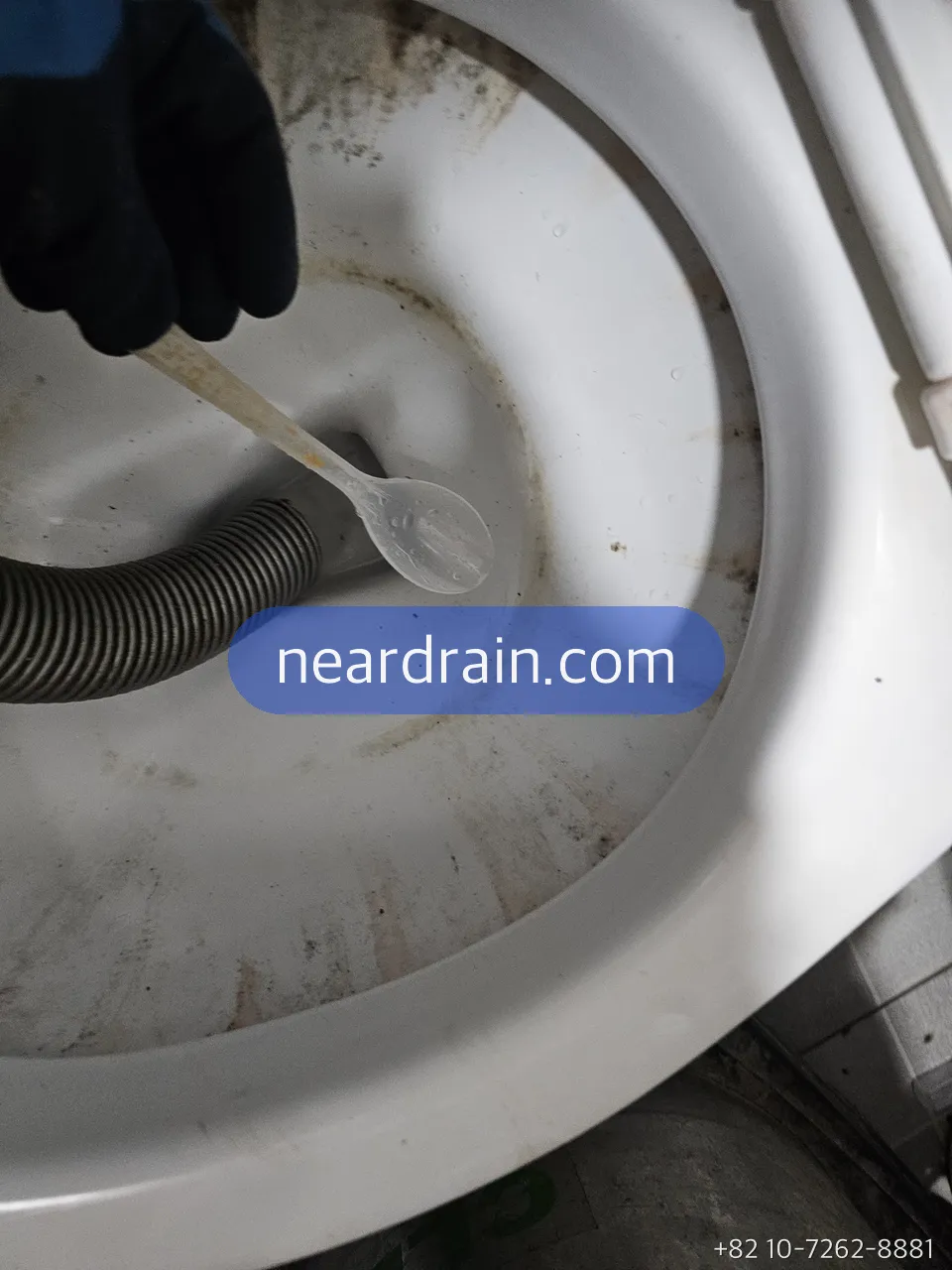
- An object went in. A phone, an air freshener cap, a toy, a bottle of contact lens solution — anything that is not paper and waste. Objects sit at the first bend and can be hooked out with the bowl in place; a plunger drives them past that bend and into the wall. Close the valve and stop.
- It re-clogs every few weeks. A toilet that clears with a plunger and blocks again a fortnight later has a narrowed trapway, a scaled branch line, or a half-flushed rope of wipes waiting in the pipe. Clearing it again is not fixing it; a camera look is.
What we do that a plunger cannot — and what to photograph before texting
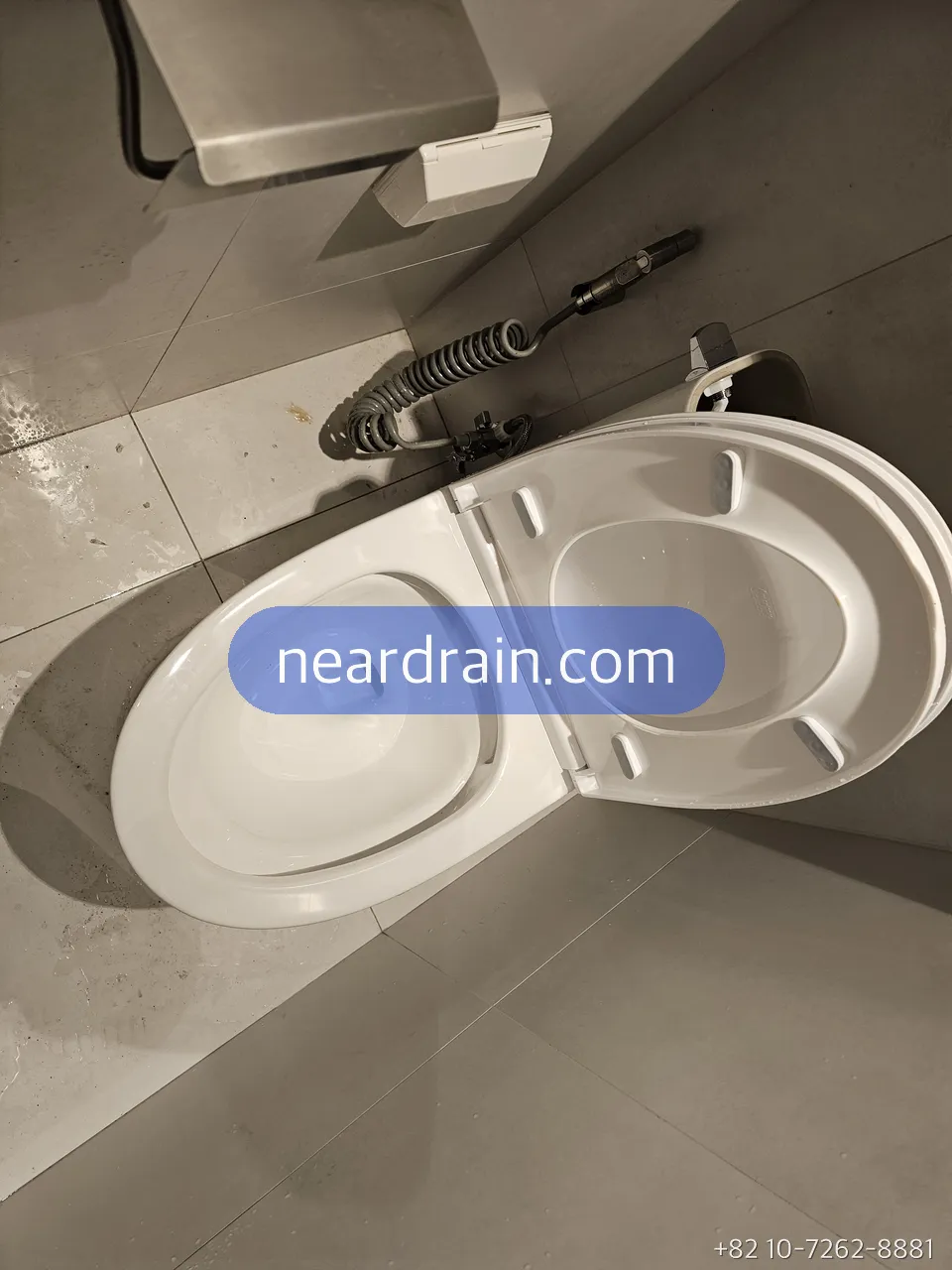
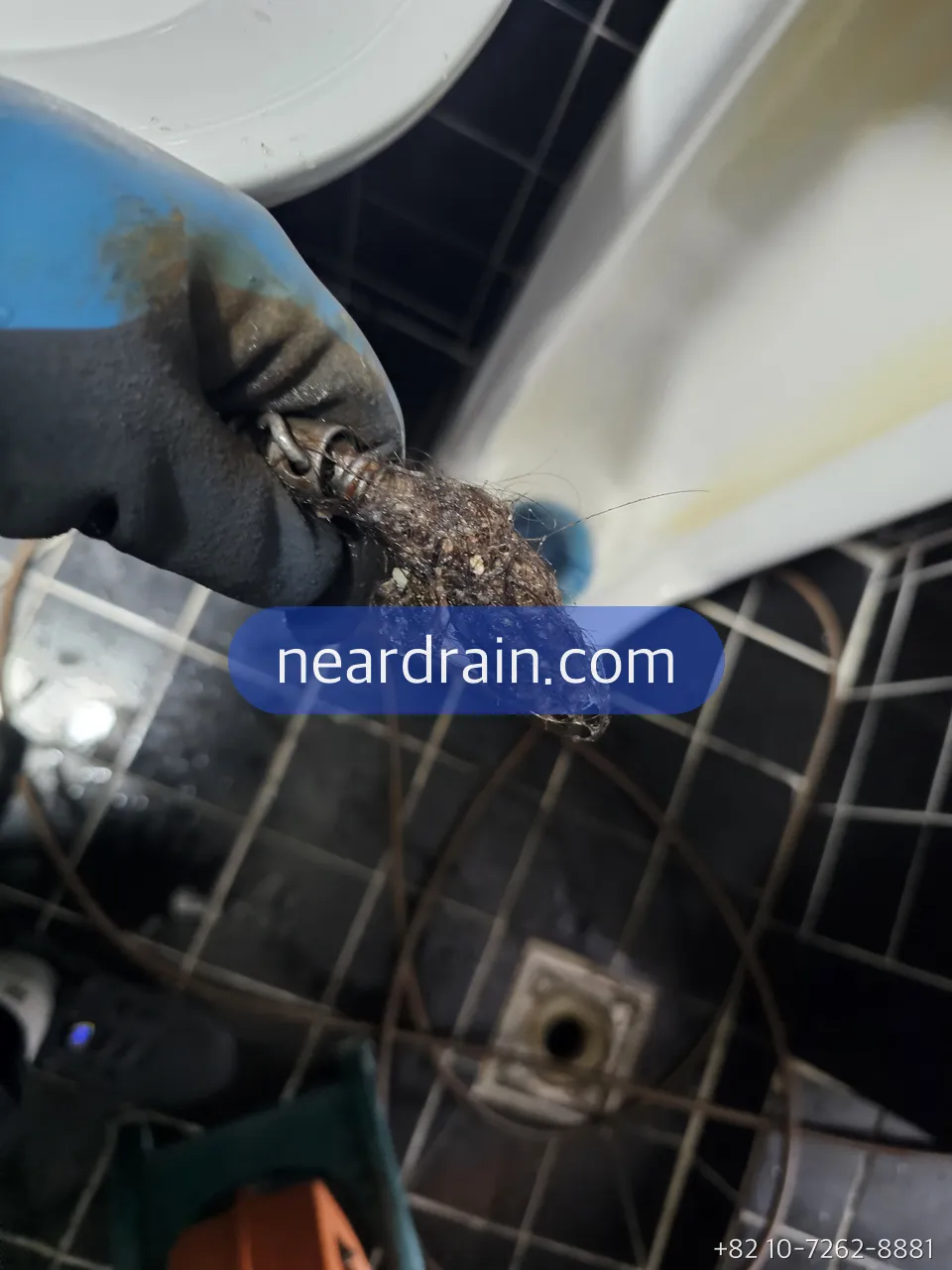
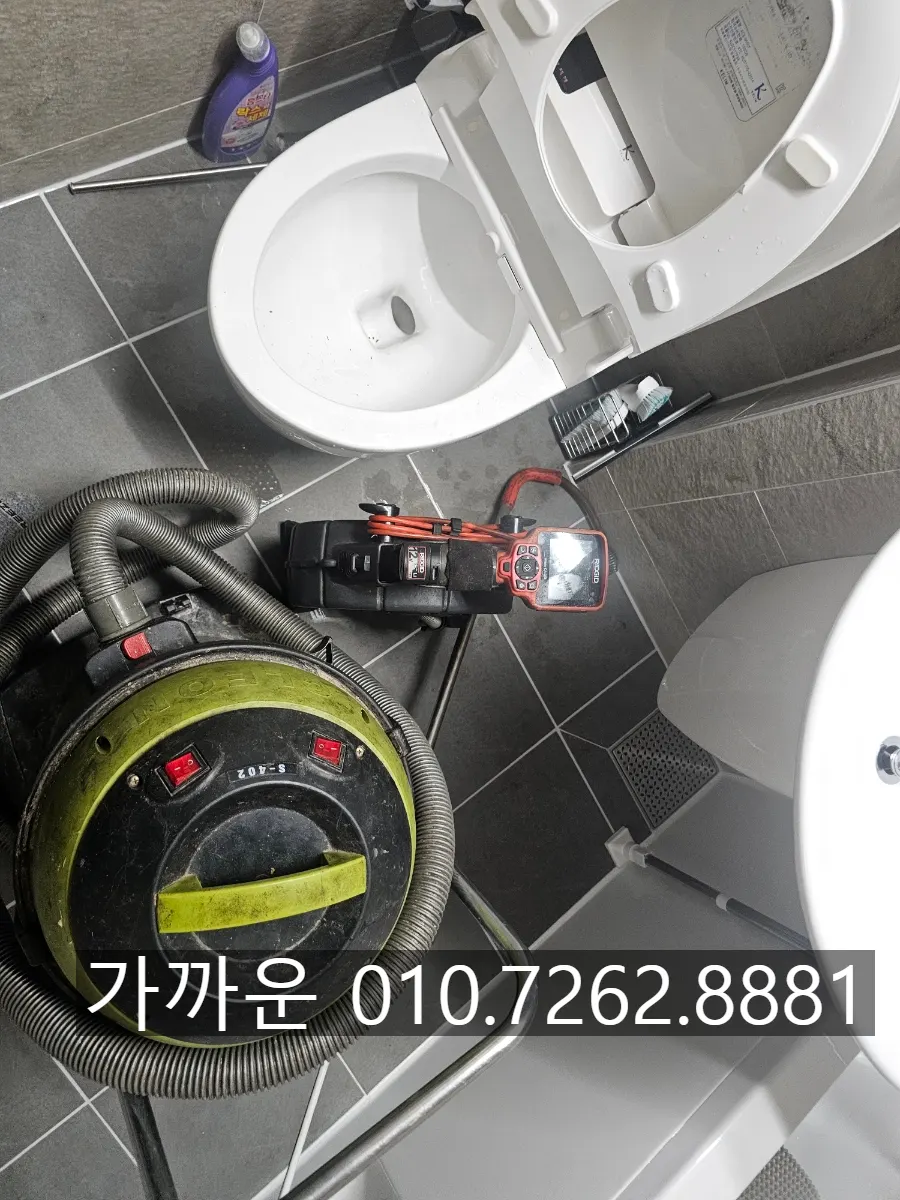
From the fixture we run a small spring cable (an auger) through the trapway and the branch line without lifting the toilet off the floor, which is the outcome in most calls. Objects are retrieved with a hook or a grabber under a small inspection camera; a repeat clog gets the camera run down the line so you can see what is narrowing it. If the block is in the building's shared pipe we say so before quoting, because that is the landlord's or the management office's job to authorise. Before you text, photograph three things: the bowl from above with the water level visible, the floor drain, and the tank interior with the lid off. Send them with your building type and floor and we tell you honestly whether it is today or tomorrow, and what the visit would involve. The service page is clogged toilet repair; if the problem is a weak flush or a tank that will not fill rather than a block, that is toilet repair & tank parts instead.
Questions people ask mid-plunge
I bought the sticker and it did not work. Now what?
Peel it off, let the bowl settle, and read the water level. If it dropped a little over the twenty minutes you were pushing, the clog is paper and a proper flange plunger or a bucket of warm soapy water will finish it. If the level did not move at all, the sticker was never going to work: something solid is in the trapway, or the block is past the toilet in the pipe. That is the point to stop and text us a photo of the bowl — pushing harder only packs it tighter.
Is it safe to plunge a toilet with a bidet seat?
Yes, with two cautions. Unplug the seat first, because plunging splashes and the seat is an electrical appliance sitting in the splash zone. And plunge from the front with the lid of the seat raised, not by leaning the plunger against the seat hinge — the plastic hinges on Korean bidet seats snap easily and that turns a clog into a seat replacement.
Can I flush toilet paper in my building at all?
In most apartments built after the mid-1990s, yes; in older villas with narrow cast-iron trapways, the answer is often a reluctant no, and that is where the wastebasket by the toilet comes from. Our separate guide on flushing toilet paper in Korea explains how to tell which building you are in. Wet wipes are a no everywhere, in every building, whatever the packet says.
My roommate dropped a phone in. Should I try the plunger?
No. A plunger pushes water and whatever is in it down the trapway, and a phone that is currently sitting at the first bend — where we can hook it out in minutes without removing the toilet — ends up wedged in the pipe behind the wall. Close the angle valve, do not flush, and text us. Retrieval without removing the bowl is the usual outcome when nobody has plunged first.
How do I tell my landlord in Korean that the toilet is blocked?
Copy this and change the unit number: "안녕하세요, ○○호 세입자입니다. 변기가 막혀서 물이 안 내려갑니다. 뚫어뻥으로 해봤는데 안 돼서 수리 업체를 부르려고 합니다. 확인 부탁드립니다." It says you tried the plunger and are calling a repair company. Attach the photo of the bowl; landlords respond faster to a picture than to a description.
Plunger failed? Send the bowl photo
Text the three photos above in English or Japanese. If it is a plunger-type clog we will say so and tell you which tool to try; if it is one of the three stop signs we tell you what the visit involves and confirm the figure on site before starting. Calls and texts taken any time.
Toilet calls from our own sites
No stock photos on this site — every image below was taken by our crew on a real call.