Home › Guides › Plumbing emergency
Is this a plumbing emergency? What to do in the first ten minutes, and what to send us
Searching "emergency plumber near me" at midnight in Seoul gets you booking apps and directories, not an answer to the actual question: is this an emergency, and what should you be doing with your hands right now? This page is that answer, written by the crew that takes the call — the four situations that cannot wait, the valves to find in a Korean unit, and what to send so our reply is a realistic window instead of a promise.
The four situations that cannot wait
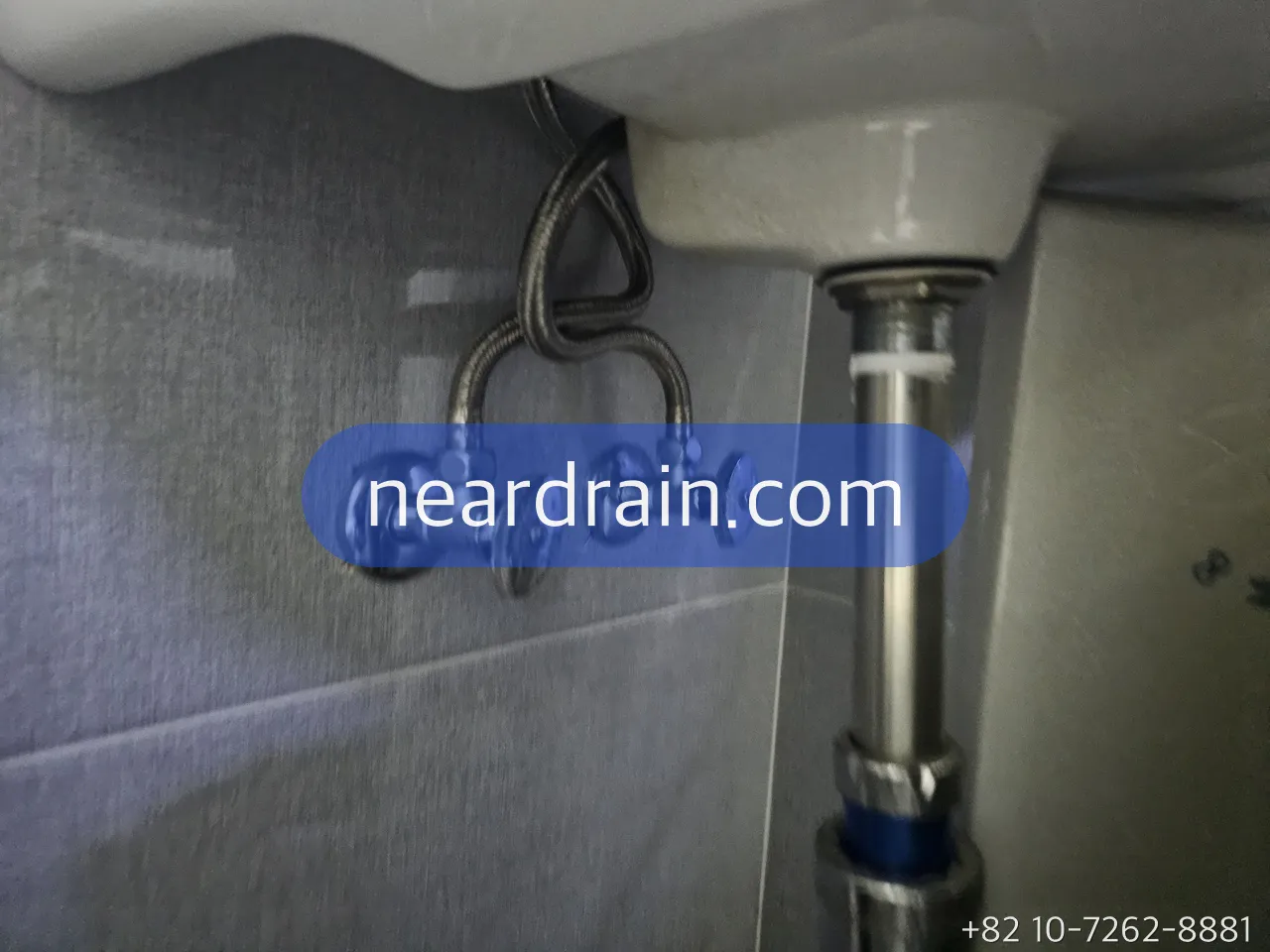
- Water you cannot stop. A burst supply hose under the basin, a split boiler feed on the balcony, a bidet T-valve that has sheared — anything where water is moving and the valve you closed did not end it. Every minute is water into the floor slab and, in a Korean apartment, into the unit below.
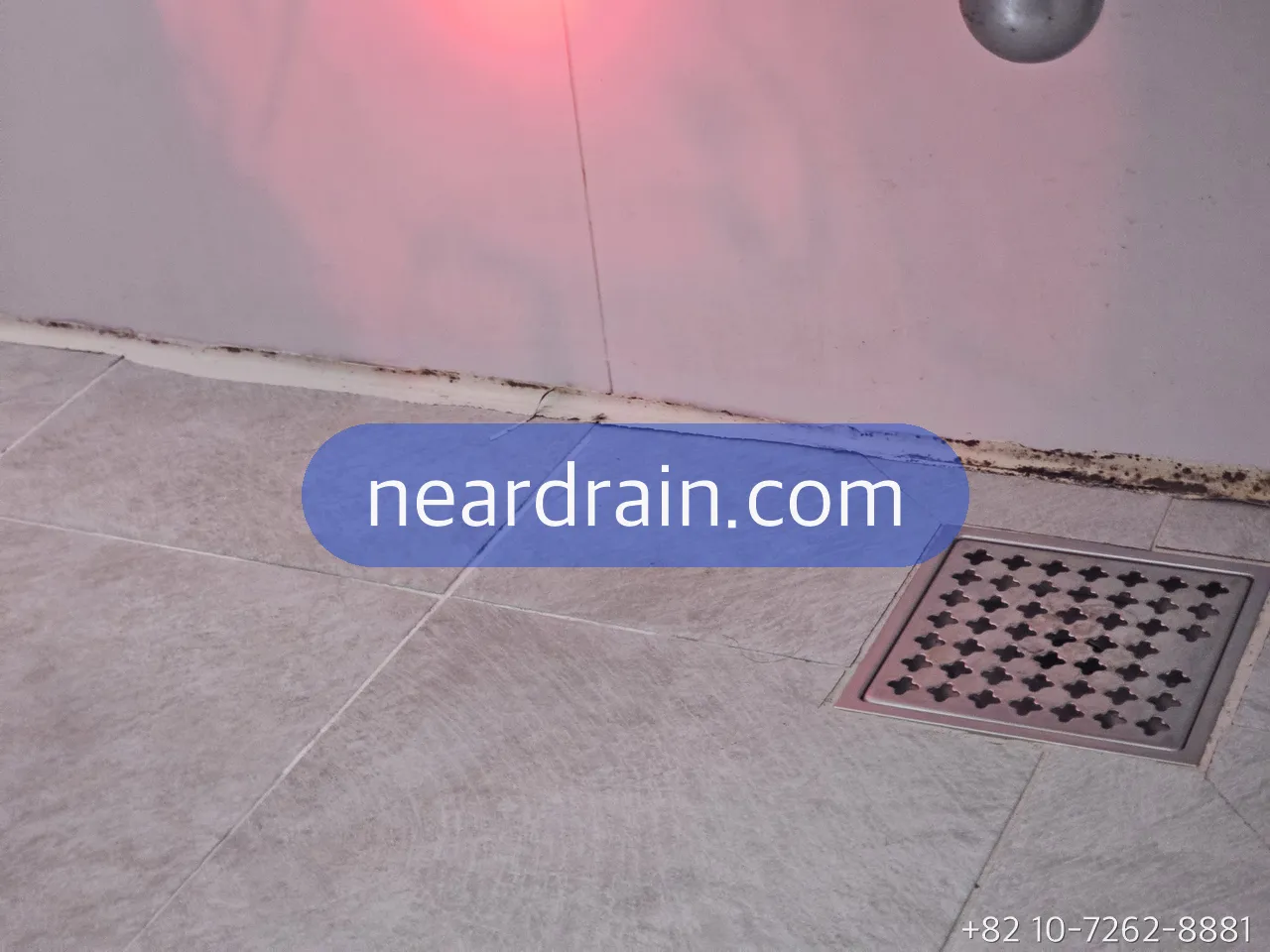
- Sewage coming up a floor drain. Grey or black water rising through the bathroom floor drain (유가) or the veranda drain, usually while an upstairs neighbour is running water. This is the building's line backing up into the lowest open point, which is you. It does not stop on its own and it gets worse with every flush above you.
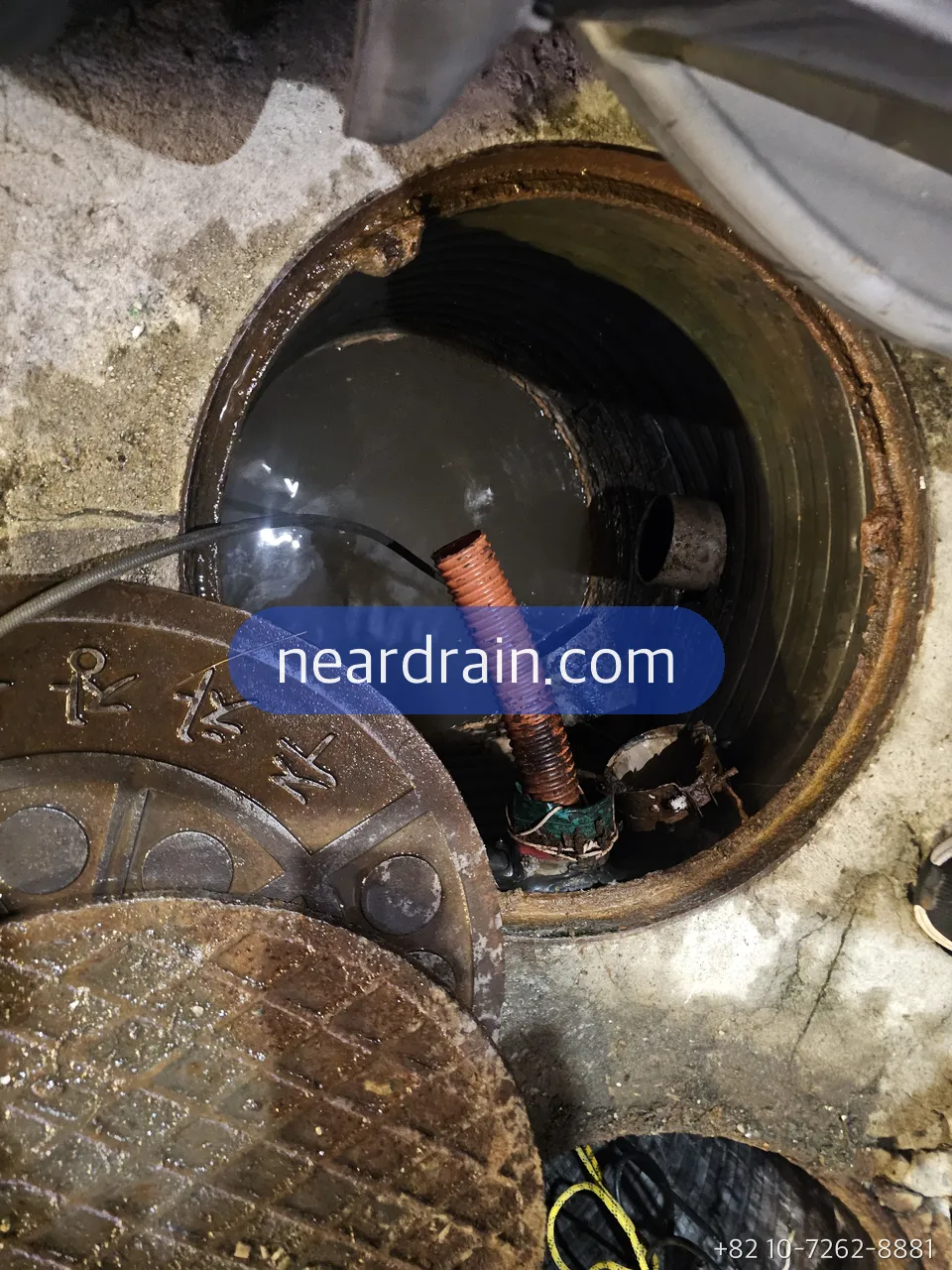
- A pit pump alarm in a basement shop. If your bar, cafe or studio sits below street level, its toilets drain into a sealed pit with a pump. The alarm light or buzzer means the pit is at the level where the next flush overflows onto your floor. Details on our basement sewage lift pump page.
- A leak that has reached the neighbour below. Once water is dripping from someone else's ceiling the clock is running on their ceiling, their furniture and the conversation about who pays. Stopping the source tonight is cheaper than any repair.
The situations that can wait until morning — and cost you less for waiting
A slow shower drain, a dripping tap, a flush that has gone weak, a sewer smell, a tank that takes ten minutes to fill: none of these get worse between midnight and 8 AM in a way that changes the repair. Booking them for the morning gets you a crew that has slept, daylight to photograph the problem, and a management office that is open if the building has to be involved. Text us anyway — the photos are useful whenever they arrive — but expect the reply to be a morning slot rather than a headlight in your alley. For the drain-smell case in particular, the drain smell guide may solve it before we are needed at all.
The first ten minutes: the valves to find in a Korean unit
Every Korean apartment, villa and officetel has four shut-offs. Learn where yours are on a calm day; at 2 AM you will be glad you did.
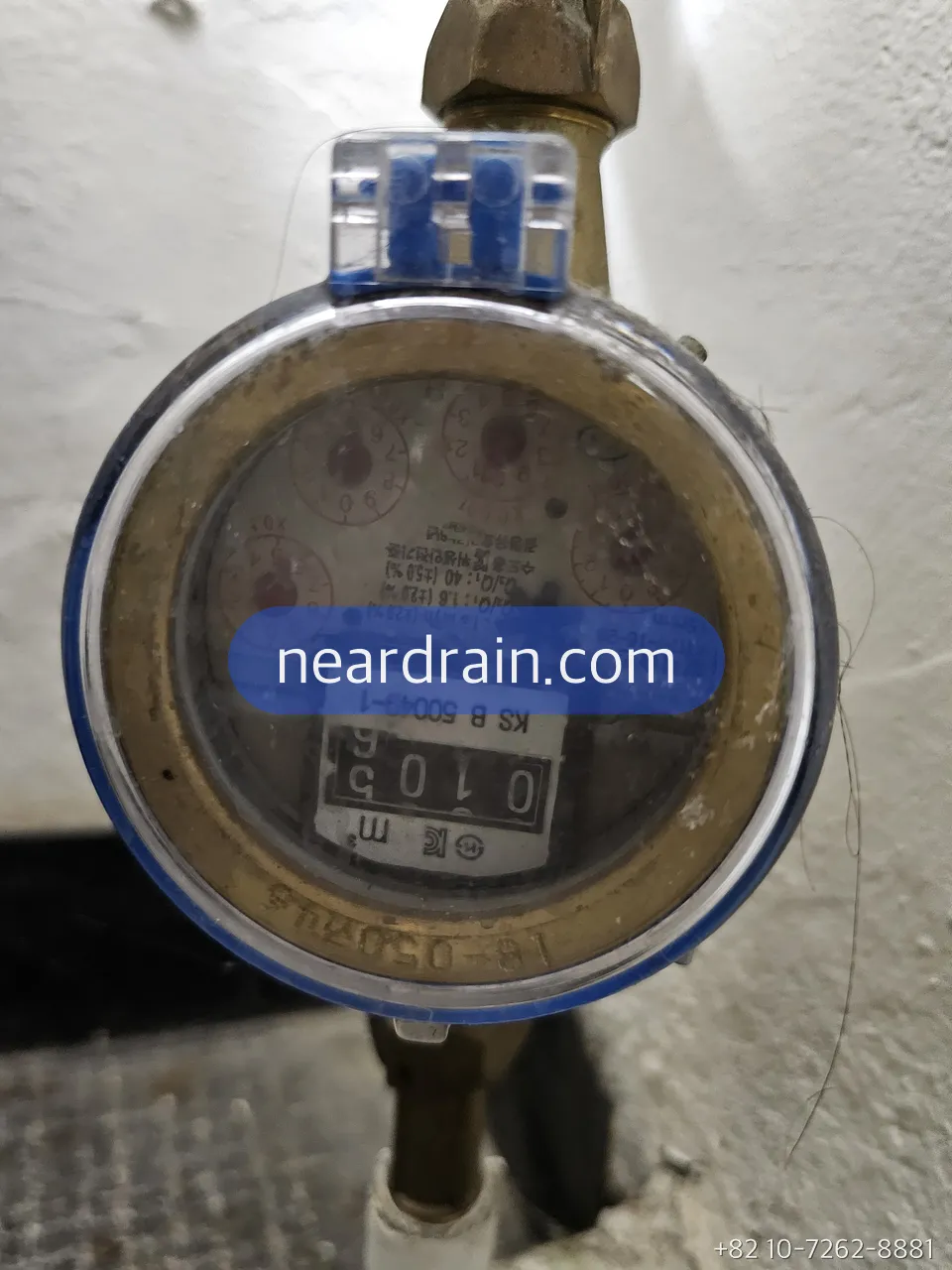
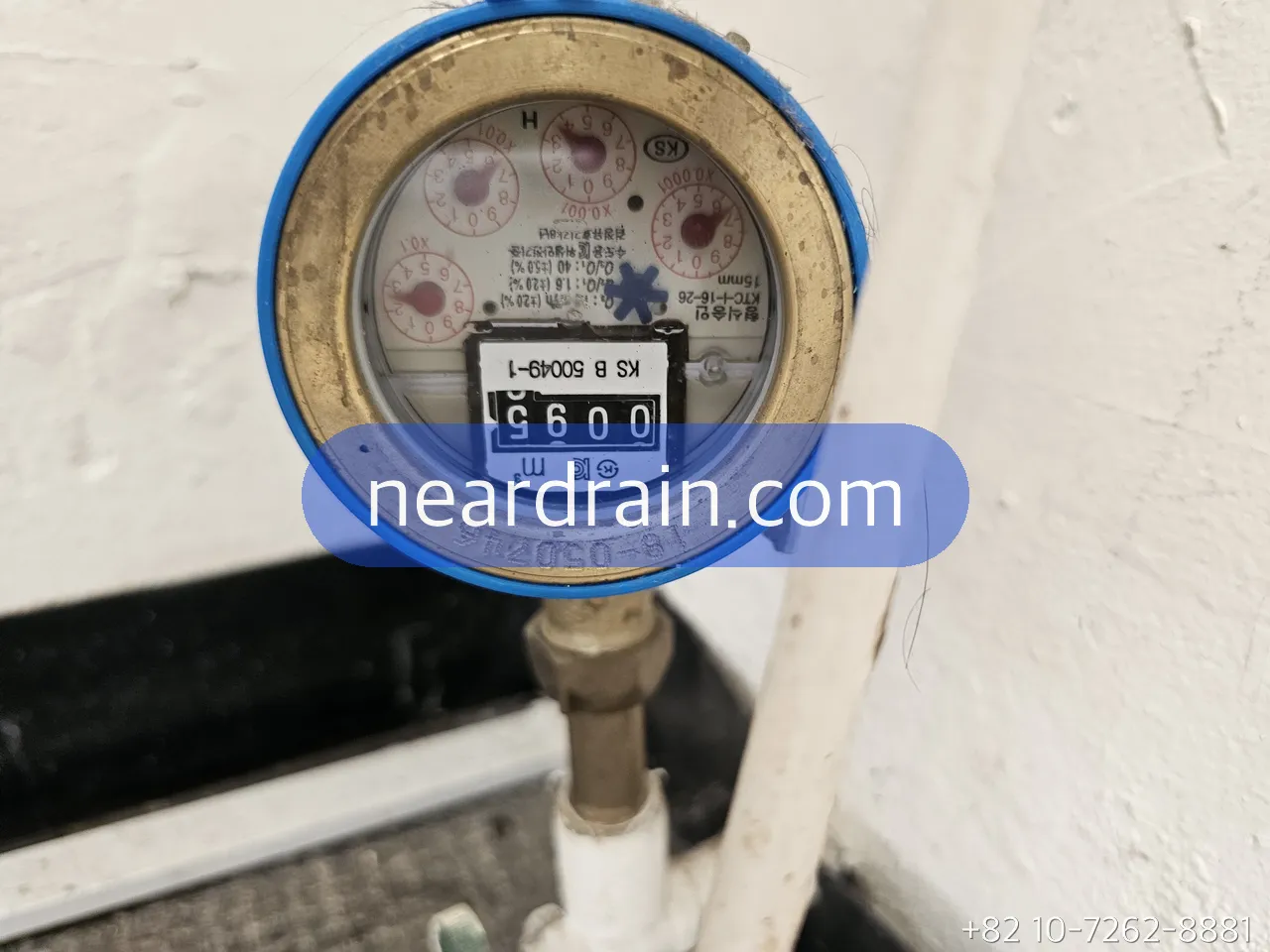
- The main shut-off in the meter box (계량기함). In an apartment it is a small steel door in the corridor wall or a hatch by the front door; in a villa it is usually a box at the stair landing or outside at ground level. Inside is the water meter with a valve on one side — a lever (turn a quarter, so it sits across the pipe) or a wheel (clockwise until it stops). This kills everything in the unit.
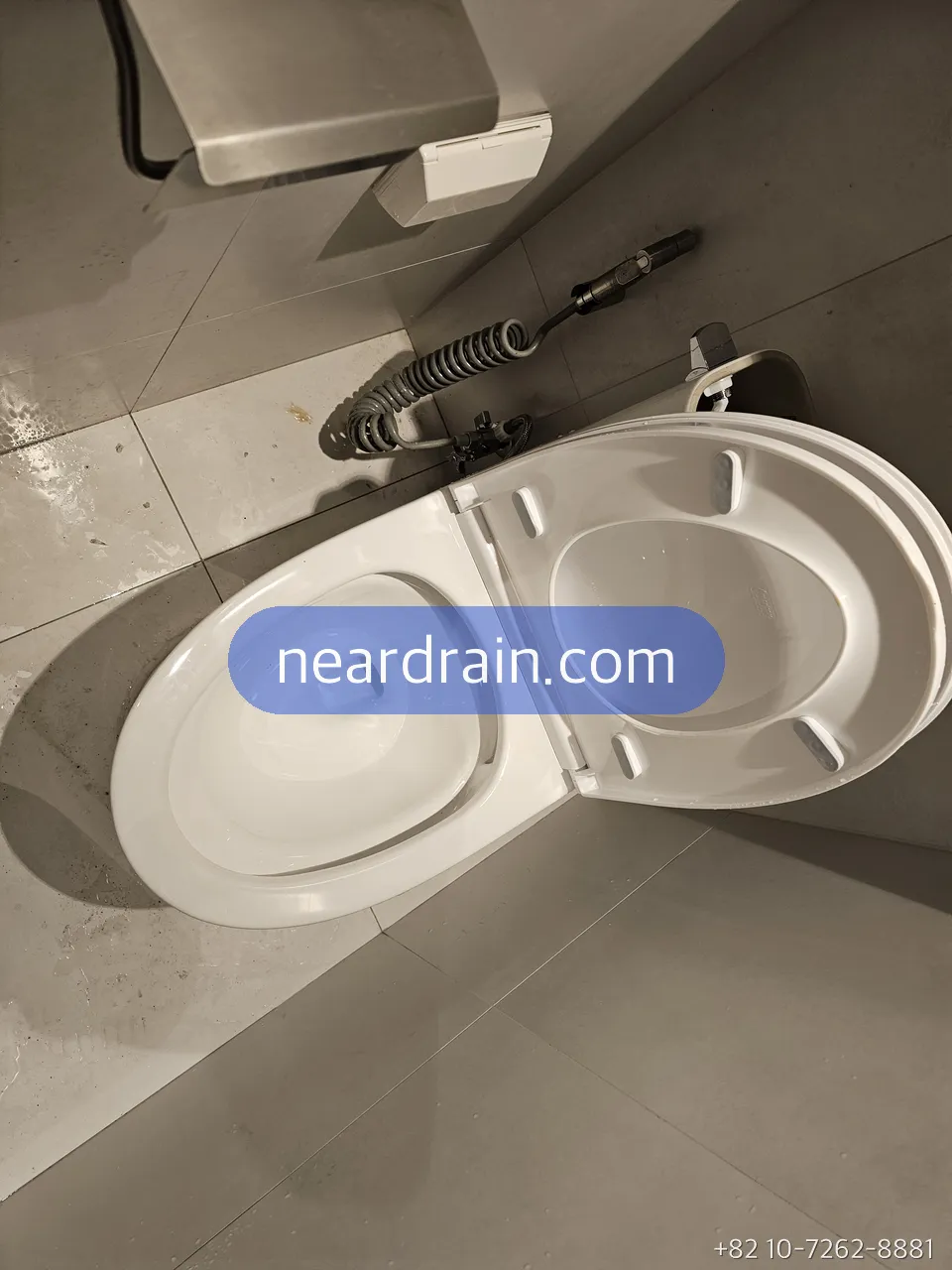
- The toilet angle valve (앵글밸브). Chrome, on the wall behind or beside the toilet where the supply hose starts. Clockwise to close. Ends any toilet overflow that is coming from the tank rather than from below.
- The boiler water valve. On the balcony under the gas boiler, among the insulated hoses: one valve feeds cold water in, one sends hot water out to the unit. Close the inlet and the boiler line stops. Do not touch the gas valve — that is the boiler company's territory.
- The washing machine tap. The small tap on the veranda wall where the machine's inlet hose connects. A split inlet hose is the single most common "water everywhere" call in Seoul villas, and this tap ends it instantly.
What to text us so we can answer honestly
Three photos and four facts. The photos: the fixture or the water (bowl, drain, puddle), the wider room with the floor drain in frame, and any valve you have already closed. The facts: building type (apartment, villa, officetel, shop), the floor you are on, whether water is still moving, and whether anyone below has been affected. From that we can tell a supply-side emergency from a drain-side one, know whether a pump or a jetting unit rides along, and give you a time window that we can actually keep. Our reply looks like: "Villa, second floor, floor drain backing up while upstairs runs water — that is the building line, we would bring the machine, and tonight we can be there in the window we text you after checking the road. Please keep upstairs off the water until then." Not a countdown, not a promise of a number of minutes — a window we stand behind. The full texting method, including copy-paste Korean lines, is in how to call a plumber in Korea.
Night, weekend and holiday calls: how they are scheduled
Calls and texts are taken at any hour, including Chuseok and Seollal. What changes at night is access, not our willingness: an apartment complex needs the security desk to let a truck into the parking level, a villa needs the landlord or the downstairs neighbour to open a pit or a meter room, and a basement shop needs someone with a key. When you text, tell us who can open doors. If the building's shared line is the problem, the management office (관리사무소) has to be told even at night — the guard station usually has a duty number — because the repair is theirs to authorise and the neighbours above have to be asked to stop using water.
Renters: notify the landlord in Korean, and photograph before you clean
Two things protect your deposit. First, a message to the landlord and the management office before anyone is called — copy this line and change the unit number:
안녕하세요, ○○호 세입자입니다. 지금 (화장실 바닥 배수구에서 물이 올라오고 / 세면대 아래 호스가 터져) 있습니다.
밸브는 잠갔고, 사진 첨부합니다. 수리 업체를 부르려고 하는데 확인 부탁드립니다.
Second, photos of the damage before it is mopped: the water on the floor, the wet furniture legs, the stain on the ceiling below if the neighbour lets you in. The who-pays guide explains why the timestamped photo settles more arguments than the lease does.
Not us — and who it is instead
- Gas boilers. No hot water, an error code on the panel, a boiler that will not ignite: the boiler maker's service line (AS). Our no-hot-water guide explains which part of that problem is ours.
- Electrical. A tripped breaker that will not reset, sparks, a wet outlet: an electrician, and in a building the management office.
- The city main outside the meter. Water in the street, a dry building, a burst in the road: Seoul Waterworks via 120.
- Flooding from the street. Storm water coming in at ground level during a downpour is the district office and the fire service, not a drain machine. A rooftop or balcony rain drain that has overflowed into your unit, on the other hand, is ours — see rooftop & balcony rain drain.
- Waterproofing, tiling, wallpaper. After the water stops, the rebuilding is a different trade. We tell you which parts are which on site.
Questions people ask at midnight
It is 2 AM and the toilet is overflowing. What do I do right now?
Close the angle valve on the wall behind the toilet (turn clockwise until it stops) — that ends the supply, and the bowl cannot refill. Do not press the flush again. Lift the tank lid and push the flapper down by hand if water is still running into the bowl. Then mop toward the floor drain, take two photos (the bowl, and the floor with the drain in frame), and text them to us with your building type and floor. We answer with what is realistic tonight versus first thing in the morning, and the bowl stays where it is until then.
Will you come tonight?
We tell you honestly after seeing the photos. Water that will not stop, sewage rising through a floor drain, a basement pit pump alarm and a leak reaching the neighbour below are the four we treat as tonight problems. A slow drain, a drip, a weak flush or a smell we usually schedule for the next morning, and we say so instead of turning up at 3 AM for a job that gains nothing from the hour. Either way the reply is a time window, and the price is confirmed on site before any work starts.
The building's water is off — is that you or the city?
If every tap in the unit is dry and the neighbours have nothing either, it is the building or the city, not your plumbing. Check the notice board and the management office first; Seoul Waterworks publishes planned shut-offs and you can reach the city line on 120 (Korean, with an English option). If only your unit is dry, the meter valve in the corridor box may have been closed after a leak report — that is a five-second fix worth checking before anyone is called.
My neighbour downstairs is calling about water. Who do I contact first?
Stop using water in the room above their stain — bathroom, washing machine, kitchen — and photograph your floors dry or wet before anything is cleaned. Then message the landlord and the management office in Korean in that order, and text us the photos. Our guide on water leaking into the apartment below walks through day one in sequence; the short version is that the record you make in the first hour matters more than anything you say on the phone.
Do you charge more at night?
The figure is set on site by what we find and what it takes to fix, and it is stated before work starts so you can decide. We do not put a number on the phone before seeing the problem. What we can say in advance is whether the job is one we would do tonight or one you are better off scheduling for the morning.
Send the photos, then close the valve
Or close the valve first — that order is fine too. Text us in English or Japanese with the three photos and the four facts above, and the reply is a straight answer about tonight versus morning. Calls and texts taken any time.
What the tonight calls look like
No stock photos on this site — every image below was taken by our crew on a real call.