No hot water? Three different causes, three different people to call
"Korean apartment no hot water" is the question that most often gets the wrong person called first. The boiler on the balcony belongs to the boiler maker's service line; the mixer in the shower belongs to a plumber; the electric tank under an officetel sink is somewhere in between. Which of the three it is takes about two minutes to work out, and this page is those two minutes — including the panel buttons in English, since 온수 and 외출 are not on most translation apps' priority list.
First, which system do you have?
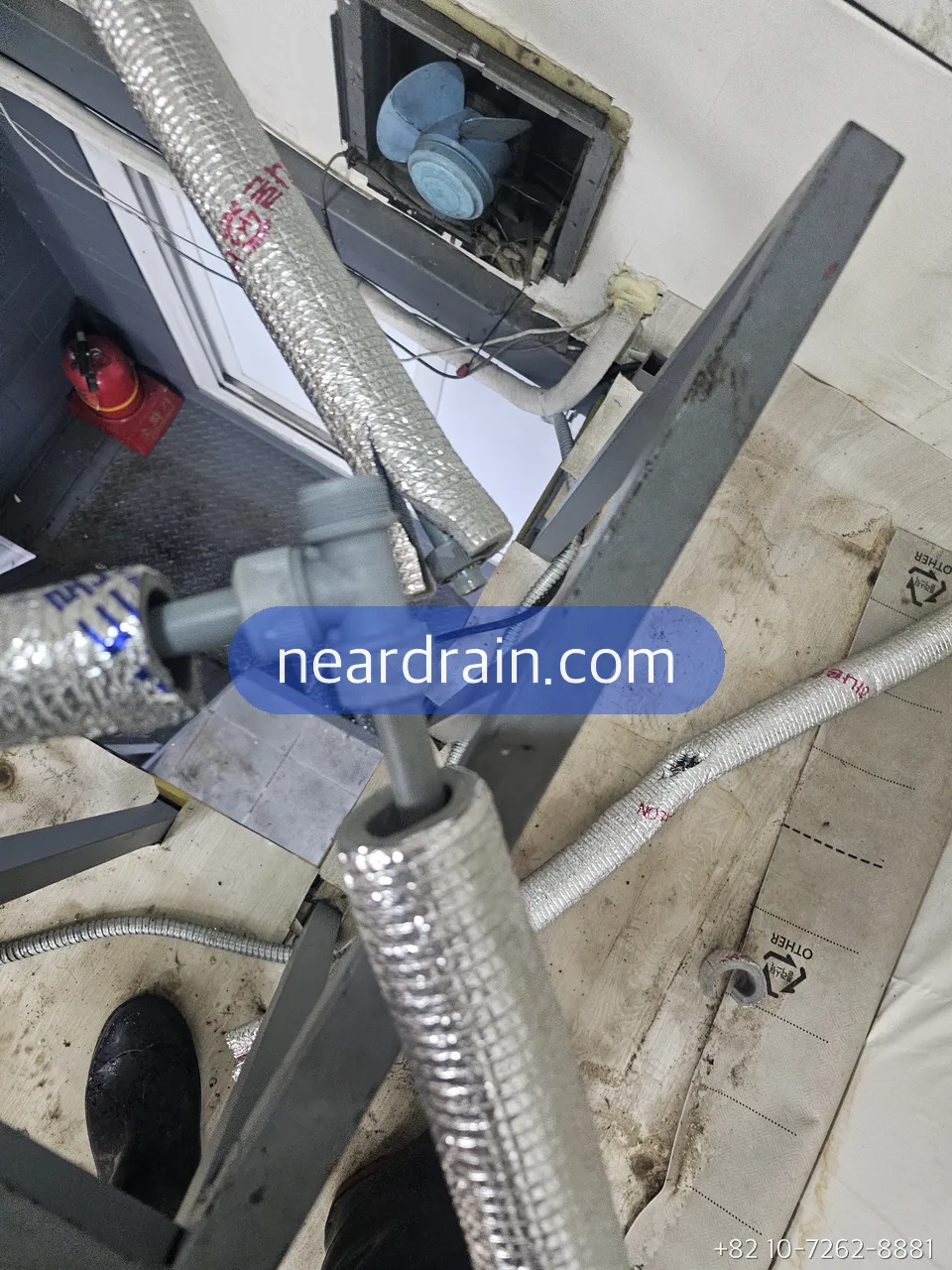
- A gas boiler on the balcony (개별 보일러) — the white box with a flue through the wall, insulated hoses below it, a panel in the living room or hallway. This is most apartments, nearly all villas, and most officetels built before the 2010s. Hot water and floor heating (온돌) both come from it.
- District heating (지역난방) — large complexes in Ichon, Banpo, the newer Gangnam and Songpa estates. No boiler in your unit; a heat exchanger in the building's utility room makes the hot water, and the panel controls only heating. No hot water here is building-wide or riser-wide and the management office is the first call.
- An electric tank heater (전기온수기) — a small white cylinder under the kitchen sink or in the bathroom of an officetel studio, rooftop room (옥탑방) or converted shop unit. Tens of litres, heats overnight, runs out after one long shower. Its own breaker in the fuse box.
The boiler panel in English: 온수, 난방, 외출, 예약 — and the button combinations that turn hot water off
The wall panel has four modes and a temperature dial, and two of the four quietly disable hot water in ways that catch every new tenant at least once.
- 온수 (hot water) — the boiler heats water when a tap opens. If this mode is not lit or not selected, the tap runs cold no matter what the dial says.
- 난방 (heating) — floor heating on a set temperature. Hot water still works in this mode on nearly all boilers, but the panel display changes and people assume something is off.
- 외출 (away) — the trap. It drops the floor heating to a frost-protection level and on many models switches hot water off. Coming home to a cold shower in October usually means someone pressed 외출 before a weekend away.
- 예약 (timer) — heating on a schedule. Hot water behaviour varies by brand; if the shower goes cold at the same time every day, this is why.
The reset: switch the panel out of 외출 into 온수 (or into 난방 with 온수 lit), set the hot water dial to the middle, open the bathroom tap on full hot and wait a minute. If the boiler fires — you hear the fan and the burner on the balcony — the panel was the whole problem. If it does not fire, or fires and stops with a code on the display, that is the boiler maker's service line, and the Korean line to copy is below. One more panel thing: in a Korean bathroom mixer the handle points toward the hot side; a mixer knob turned fully to the left is not automatically the hot position on every brand, so check the red mark before deciding the boiler has failed.
Hot at one tap but not another: the mixer cartridge, the diverter, the heater's own valve — this is us
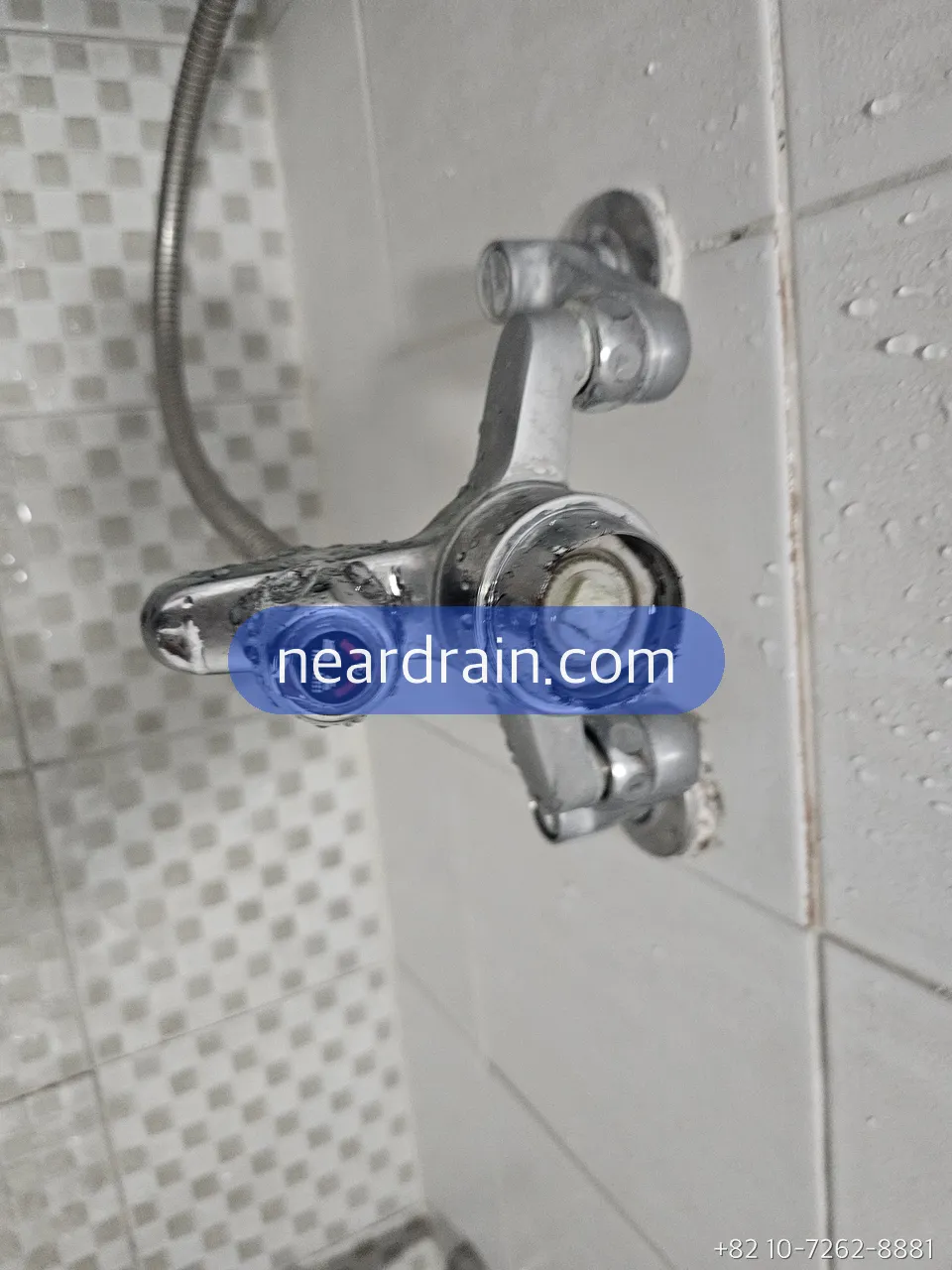
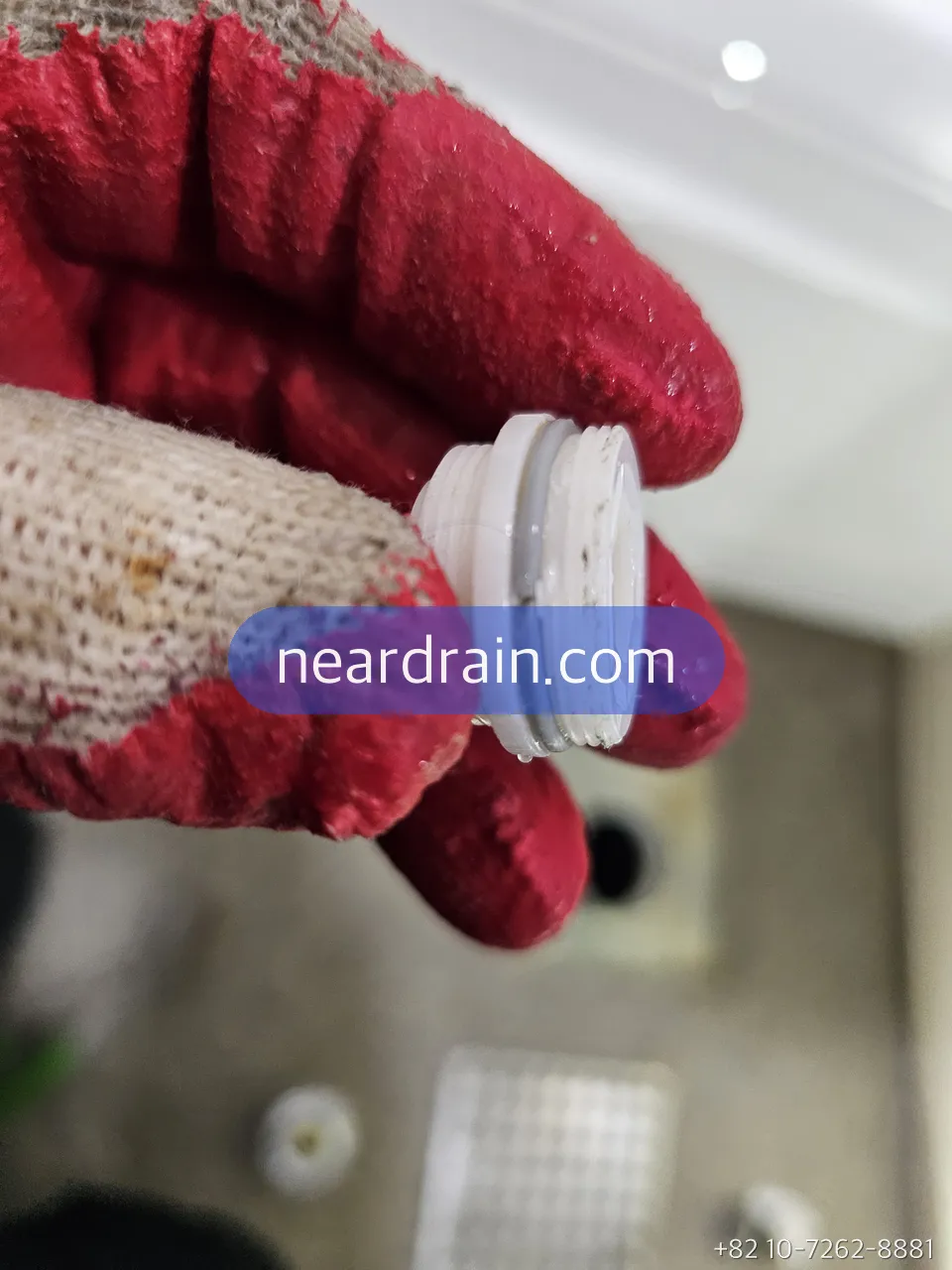
If the kitchen runs hot and the shower does not, the boiler is fine. Inside the shower mixer a cartridge blends hot and cold; when its seals wear, cold water crosses into the hot side and the shower stalls at lukewarm however far you turn it. A diverter that has failed sends water to the wrong outlet or splits it between both, which reads as "no pressure and no heat" at the same time. On an officetel electric heater there is a shut-off valve on the cold inlet that gets closed during a repair and never reopened. All of that is a plumbing visit: a cartridge swap, a diverter replacement, a valve opened. Details on what fails in a Korean wall-mount mixer are in the Korean shower faucet guide, and the service page is faucet & fixture replacement.
Hot water everywhere is gone and the panel shows a code: this is boiler AS (제조사)
Every Korean boiler brand runs a national service line, and the technicians carry the parts for their own units — which is why we do not open a boiler and why the AS visit is the right one when the whole unit is cold and the panel is complaining. Before calling, photograph the panel with the code showing and the rating sticker on the boiler body (model, serial). Then, if your Korean is thin, use this line on the phone or in the maker's app chat:
보일러 온수가 안 나옵니다. 패널에 에러 코드 (○○)이 떠 있습니다.
모델명은 (○○○)이고, 주소는 (○○구 ○○동 ○○아파트 ○동 ○호)입니다.
AS 방문 예약 부탁드립니다.
Renters: the boiler is the landlord's appliance almost everywhere in Seoul, and the AS fee is normally theirs. Message them first with the same photos; many landlords have the maker's number saved and will book it faster than you can.
Winter special case: frozen supply to the boiler, hot line frozen in the wall
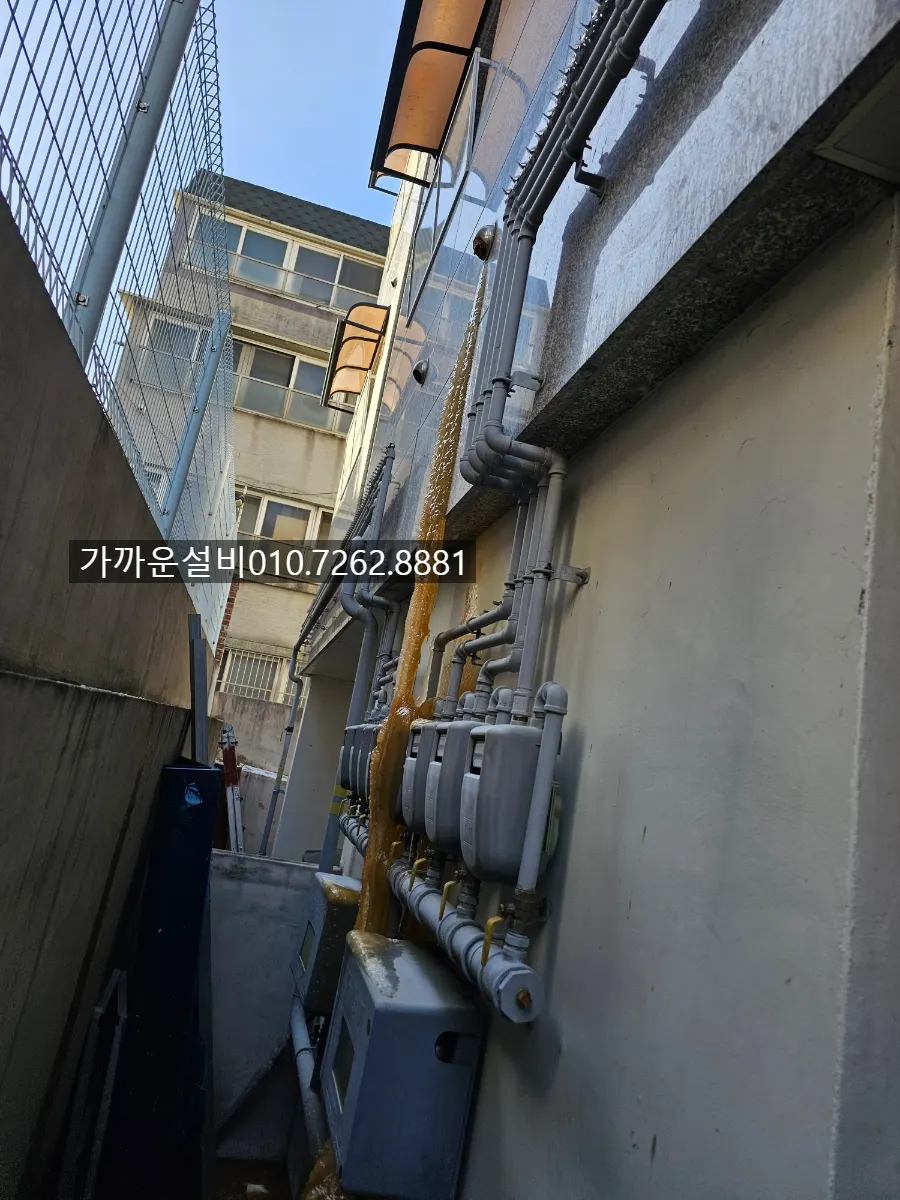
A boiler that fires, shows no code, and still gives nothing at the tap during a cold wave has a frozen pipe — usually the cold feed on the balcony where the insulation has slipped, sometimes the hot line where it runs through an exterior wall to the bathroom. The signs: cold water also weak or absent at that tap, a boiler that fires briefly and shuts down on a low-flow fault, and the problem appearing overnight after the first −10 °C night. The safe wait is to leave the panel on 난방, open the tap a crack, and let the balcony warm through the day; the unsafe shortcuts are a heat gun on a plastic pipe or boiling water on a brass fitting. The full winter routine, including which pipes to wrap in November, is in frozen pipes in Korea. If the pipe has split rather than merely frozen, water appears on the balcony the moment it thaws — close the boiler inlet valve and text us.
Electric water heater in an officetel: breaker, thermostat, relief valve, tank age
The small tank under the sink has a short list of failures and most of them are checkable without tools. The breaker for it in the unit's fuse box trips more easily than the others — look for a switch down while the rest are up. The thermostat dial on the unit may have been turned to minimum by a previous tenant or a cleaner. The relief valve pipe dripping a little after heating is normal; dripping constantly or spraying is not. And the tank age: a sticker on the body gives the manufacture date, and a tank past ten years that has started to give cooler water or to sweat at the seams is at the end. What needs a visit: a stuck relief valve, a closed or seized inlet valve, a heating element that has failed on a unit worth keeping, or a tank replacement — we fit the new unit, the valves and the hoses in one visit, and we tell you before coming whether it is worth repairing at all.
Renters: the boiler is the landlord's, cartridges are usually yours to report first
The pattern in most Seoul leases: the boiler and the electric heater are the landlord's equipment, serviced at their cost when they fail with age; the mixer cartridge and shower parts sit in the grey zone where a landlord pays for a unit that has worn out but not for one that was broken. In either case the sequence is the same — photo first, landlord second, plumber third. The photo to send: the panel showing its mode and any code, the tap that is cold with the handle in the hot position, and the boiler's rating sticker. That set lets us or the AS line answer without a visit, and it is the record you will want if the repair bill is disputed later. The who-pays guide has the longer version.
Questions people ask from a cold shower
The panel shows a number or an error — do you fix boilers?
No. A code on the panel means the boiler itself has stopped — ignition, flame sensor, a pressure fault, a frozen sensor line — and that is the maker's service line (AS), which every Korean boiler brand runs nationally. Photograph the panel with the code showing and the sticker on the boiler body with the model number, and send both to the AS line; if your Korean is not up to the call, the Korean line further down this page is written for that. What is ours is everything between the boiler outlet and the tap: valves, the mixer, the pipes, and in winter the frozen sections.
Shower is lukewarm no matter what, kitchen is hot. Why?
The water leaving the boiler is hot — the kitchen proves it — so the problem is inside the shower mixer. A worn cartridge lets cold bleed across into the hot side and caps the temperature; on some mixers a scale-choked hot inlet does the same. It is a cartridge swap, sometimes an inlet clean, and it is a plumbing visit rather than a boiler one. Our shower faucet guide shows what the cartridge is and what to photograph.
Is it safe to reset the boiler myself?
Switching the panel off and on, or pressing the reset button the panel shows after a code, is what the AS technician will ask you to do first and is safe. What is not for you to touch: the gas valve under the boiler, the pressure-fill valve on some models, and anything behind the front cover. If a reset clears the code and it comes back within the day, stop resetting and call AS — repeated resets on a real fault can lock the unit.
How long does hot water take in a Korean apartment normally?
A balcony gas boiler heats on demand, so the wait is the length of pipe between the balcony and the tap: five to fifteen seconds in a small officetel, twenty to forty in a big apartment where the bathroom is at the far end. A wait that has suddenly grown from ten seconds to a minute, with the water arriving hot in the end, usually means the mixer is letting cold through until the hot pressure wins — cartridge again — or a recirculation loop in a larger complex has stopped. District-heated complexes (지역난방) are different: hot water is near-instant because it comes from a heat exchanger in the utility room, and no hot water there is the management office's problem before anyone else's.
The electric heater in my officetel drips from a small pipe. Is that a leak?
That small pipe is the relief valve outlet, and a few drops after the heater has run is by design — the water expands as it heats and the valve lets a little out. A steady drip or a stream while the heater is cold is a valve that has stuck or a tank under too much pressure, and that is a plumbing visit. So is any water from the tank body itself, which means the tank is finished. Photograph the pipe end and the floor under the unit and send it; we tell you which of the three it is.
Not sure which of the three it is? Send the panel and the tap
Two photos — the boiler panel, and the tap that is cold — and we tell you whether it is the boiler company, the management office or us. If it is us, the visit is quoted on site before work starts. Calls and texts taken any time. 日本語でもどうぞ — the Japanese version of this guide is at お湯が出ない.
Hot-water calls that turned out to be plumbing
No stock photos on this site — every image below was taken by our crew on a real call.