Home › Services › Basement sewage lift pump
Below Street Level, Nothing Drains by Gravity: Sewage Lift Pumps for Basement Shops, Bars and Studios
If your bar, cafe or studio is a floor below the pavement, every toilet flush and every sink of dishwater collects in a sealed pit and waits for a sewage pump (오수펌프) to lift it to the street sewer. When that pump — the "pit motor" (집수정 모터) in the landlord's vocabulary — starts running long, tripping the breaker, or humming without moving water, closing time becomes the moment the toilets come back up. This page is the replacement decision explained for the operator: the signs, the parts, who owns it, and what to text us first.
Which pump page do you need? This page is for commercial basements where toilets and sinks run through a sealed lift pit. A villa or small building with a groundwater or laundry sump (집수정) under the stairs is a different pump and a different decision — see sump pit motor & sewage pump repair.
Who this is for: commercial basements (지하 상가)
- Bars and pubs in Itaewon, HBC and Hongdae basements — two toilets, an ice-machine drain and a glass washer all into one pit, busiest at exactly the hour the pump gives up
- Cafes and small kitchens a half-level down in Yeonnam and Seorae — espresso-machine rinse, milk and grounds in a pit that was sized for an office toilet
- Gyms, dance and music studios in Gangnam and Sinsa basements — showers and a dozen people using the toilets between classes
- Hair salons and nail shops with basin wastewater full of hair and product going into the pit — the impeller's least favourite mix
- Franchise operators whose head office wants the pump spec, the invoice and the photos before it approves a landlord dispute
Not on this list: villa groundwater sumps, apartment complex machine rooms with duty pumps run by the management office (they have a contractor on retainer — ask them first), and septic tanks.
How a lift station works in a Korean basement
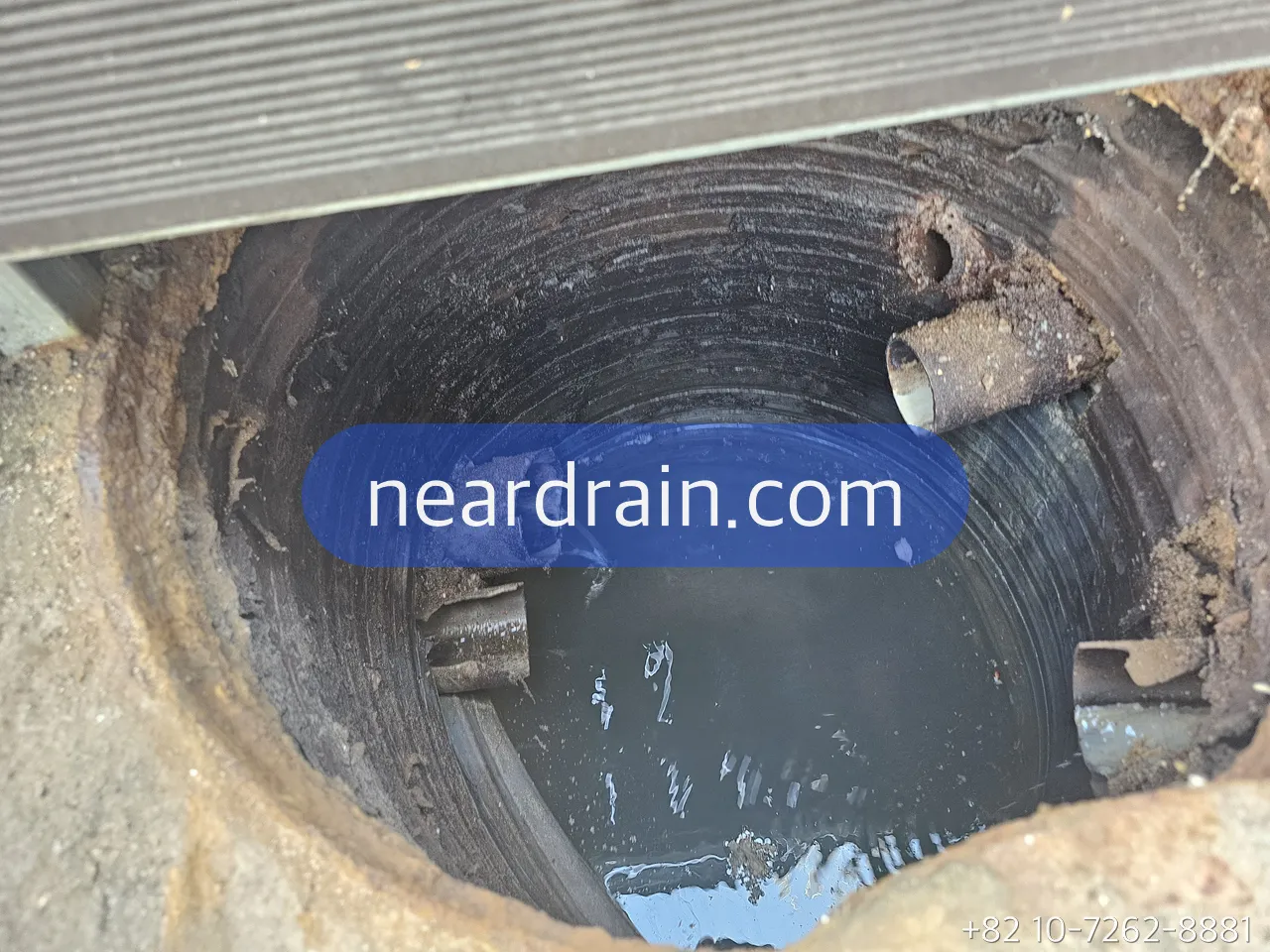
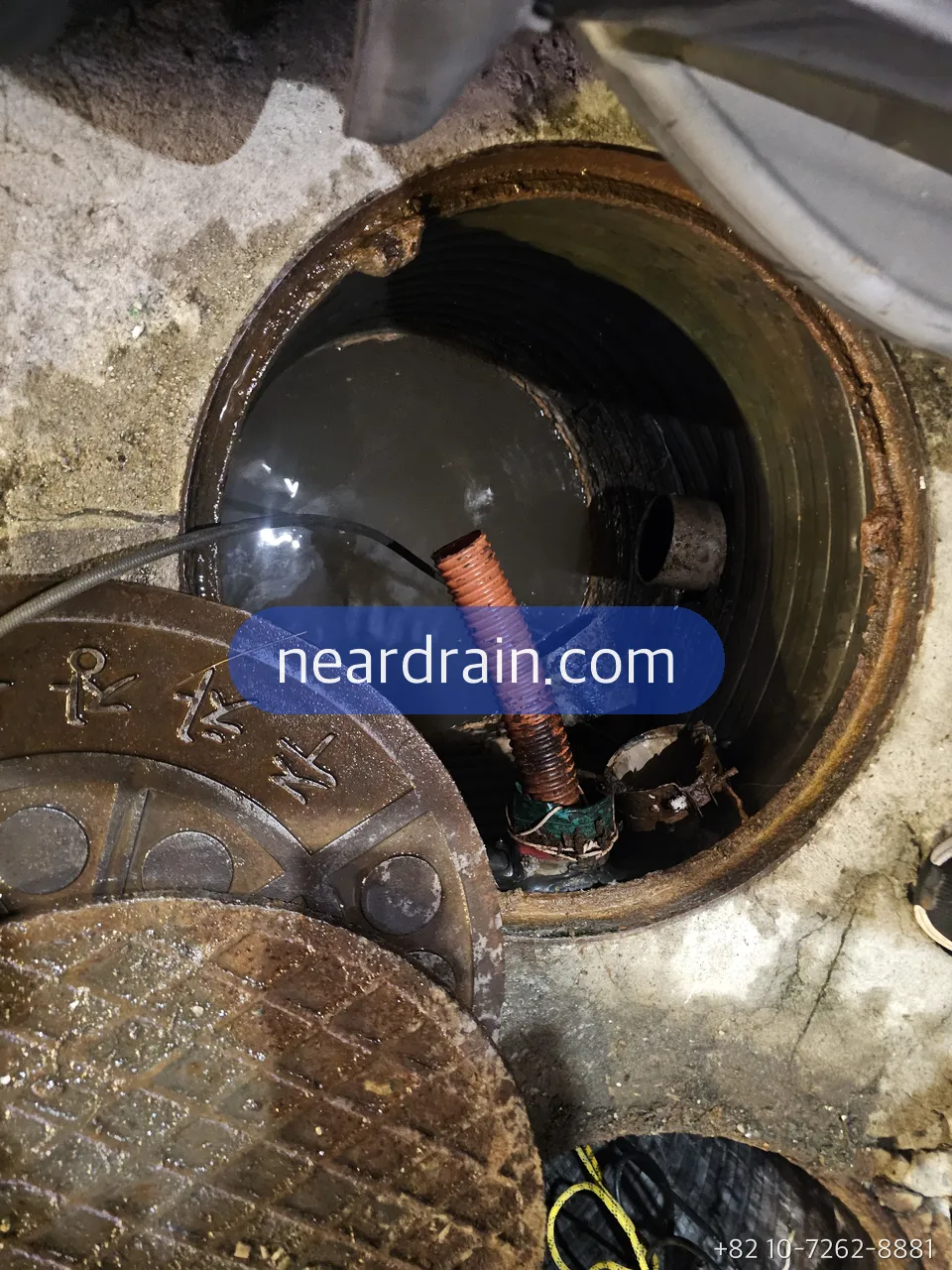
The toilets and sinks in the unit drain by gravity into a concrete or plastic pit under the floor, sealed with a hatch. Inside sits a submersible sewage pump with a float switch on a cable. When the level lifts the float, the pump starts and pushes the contents up a discharge pipe — through a check valve that stops it running back, past a union so the pump can be pulled — to a riser that joins the building's line or the street sewer at pavement level. When the float drops, the pump stops. That is the whole machine. Every failure on this page is one of those five parts: pit, pump, float, check valve, discharge.
The replacement signs, ranked
From "book a check soon" to "cut the power now".
- Runs longer each week. The cycle that used to be thirty seconds is now two minutes. Impeller wear or a discharge narrowing with scale — the earliest warning and the cheapest moment to act.
- Starts with a thud, or hums and stops. A tired capacitor or a jammed impeller. The pump is trying; it will not try for long.
- Trips the breaker. The motor is drawing locked-rotor current — seized bearings or a burnt winding. Do not keep resetting it; each reset heats the winding further.
- Alarm at closing time. The high-level float is reaching before the pump catches up. Undersized for the volume, or the check valve is letting everything run back.
- Smell from the hatch, gurgling in the floor drain. The pit is sitting full and the water seal on the floor drain has been pushed out. Level is above the inlet pipes.
- Pit level rising during service. Nothing is being lifted. Stop using water, cut power at the breaker, and text us the photos — this goes to the front of the queue and we tell you the earliest realistic window.
Parts vocabulary — so you can text us the right thing
Float switch (플로트 스위치)
The tethered ball or the vertical rod that turns the pump on and off with the level. Stuck floats are the cheapest failure and the most common cause of a pump that "never stops" or "never starts".
Check valve (체크밸브)
The one-way flap on the discharge pipe above the pump. Missing or jammed, the lifted column falls back into the pit and the pump lifts it again — all night.
Impeller (임펠러)
The rotor inside the pump body. Sewage pumps use a vortex or cutter impeller that passes solids; a drainage pump's impeller does not, and jams on the first wipe.
Capacitor (콘덴서)
The start component on a single-phase motor. When it goes, the pump hums and does not turn. A small part on a young pump; a sign of age on an old one.
Horsepower and phase (마력 · 상)
On the nameplate: 0.5 HP, 1 HP, 2 HP; 220 V single-phase or 380 V three-phase. Lift height and volume decide the HP; the building's supply decides the phase. Both must match.
Discharge diameter (토출 구경)
The pipe size leaving the pump — commonly 50 mm or 80 mm. A replacement with the wrong outlet means new fittings and a different union; it is on the nameplate too.
Repair, replace, or duplex?
Repair
Float, check valve, capacitor, a jammed impeller cleared — worth it on a pump under five years old with a sound motor. We tell you on site if the motor itself is the weak part.
Replace
Burnt winding, seized bearings, a housing corroded through, or a pump that was the wrong type from the start. The honest answer for most bar and cafe pits that have already failed once.
Duplex (2대 교대 운전)
Two pumps with an alternating controller: they share the cycles, and if one fails the other carries the night. For a bar that has closed early twice because of one pump, the second unit is cheaper than the third emergency.
The visit, in order
1 · Cut power, open the hatch
Breaker off and tagged before the hatch lifts. We photograph the pit as found — level, sludge, the state of the discharge — for your file and the landlord's.
2 · Pump-down and pit cleaning
The pit is emptied with our own pump and the settled sludge scooped out. A new pump set on old grit fails early, so this step is not optional.
3 · Pull the unit, fit and wire the new one
Old pump out by the chain or the union, new unit matched to the nameplate spec, float set to the pit depth, check valve and union checked or replaced, wiring to the existing control or a new float relay.
4 · Fill test through two cycles, photo record
The pit is filled from a hose and the pump run through two full cycles while we watch the level, the discharge and the amperage. Hatch sealed, floor cleaned, photos and the spec sheet sent to you the same day.
Landlord, franchise, or you: who owns the pump under a Korean commercial lease
Under most commercial leases in Seoul the pit and pump are building equipment (건물 설비) and the landlord's to replace when they fail from age; what the tenant is responsible for is damage from misuse — wipes, grease, a mop bucket of grit down the floor drain. In practice the pump fails at eleven at night, the landlord is unreachable, and the tenant pays to open tomorrow and argues later. Before we replace anything we put three things in writing for you: the failure we found and the likely cause, the spec of the unit going in, and the invoice in the name you ask for (yours, the landlord's, or the franchise). That document is what turns "you broke it" into a conversation about a nine-year-old pump. Our guide on who pays for repairs in Korea covers the residential side; commercial leases follow the same logic with less sympathy.
If you rent, text the landlord or the building manager a photo of the open pit and the nameplate before we replace the unit, and copy us. One message in Korean — we can draft it — saves a month of dispute.
Price
Quoted by pump spec · VAT 10% separate
Send the nameplate photo (HP, voltage, phase) and a photo of the pit hatch — we give a close range before visiting; the fixed figure is confirmed on site after the pit is opened.
- Fixed quote before work starts — you agree to the number first. If the scope turns out to be different mid-job, we stop and explain before anything continues.
- Card payment accepted. Cash receipt or corporate tax invoice (세금계산서) issued on request.
- VAT 10% is quoted separately, and we tell you the VAT-included total before starting.
What decides the figure
- Pump spec — horsepower, phase, cutter vs vortex impeller, discharge size
- Pit depth and access — a hatch in an open corridor vs a pit under the bar counter with the fridges moved
- Check valve and discharge pipe — reused if sound, replaced if scaled or leaking, priced as a named line either way
- Cleaning volume — a pit that has been sitting full for a week is more pumping and more sludge
- After-hours booking — most bar and restaurant pits are done after close; the slot and the figure are confirmed together before we come
Questions basement operators ask
The pump is running but the toilets still back up at closing time. Is it the pump?
Usually one of three things, and the sound tells us which. A pump that runs continuously but the level never drops has a worn impeller or a blocked discharge — wipes wrapped around the impeller are the classic. A pump that cycles normally but the toilets still back up has a check valve that is stuck or fitted backward, so every litre it lifts runs straight back into the pit. And a pump that only struggles at closing time is simply undersized for the volume of a full bar plus the dishwasher draining at once — it was fine when the space was an office. Text us a short video of the pit with the hatch open while the pump runs; that ten seconds usually answers it.
Can you replace it tonight so we can open tomorrow?
Text the nameplate photo and the pit photo as soon as you can, and we tell you honestly what is possible. A common single-phase unit in a standard-depth pit with a working discharge is a same-visit replacement if we have the spec on the truck; a three-phase unit, an unusual discharge size, or a pit that has to be pumped down and cleaned first is a next-morning job. We do not promise a time on a web page — we tell you the earliest realistic window once we have seen the photos and know what we are bringing.
What should I photograph: the nameplate, the pit, the control box?
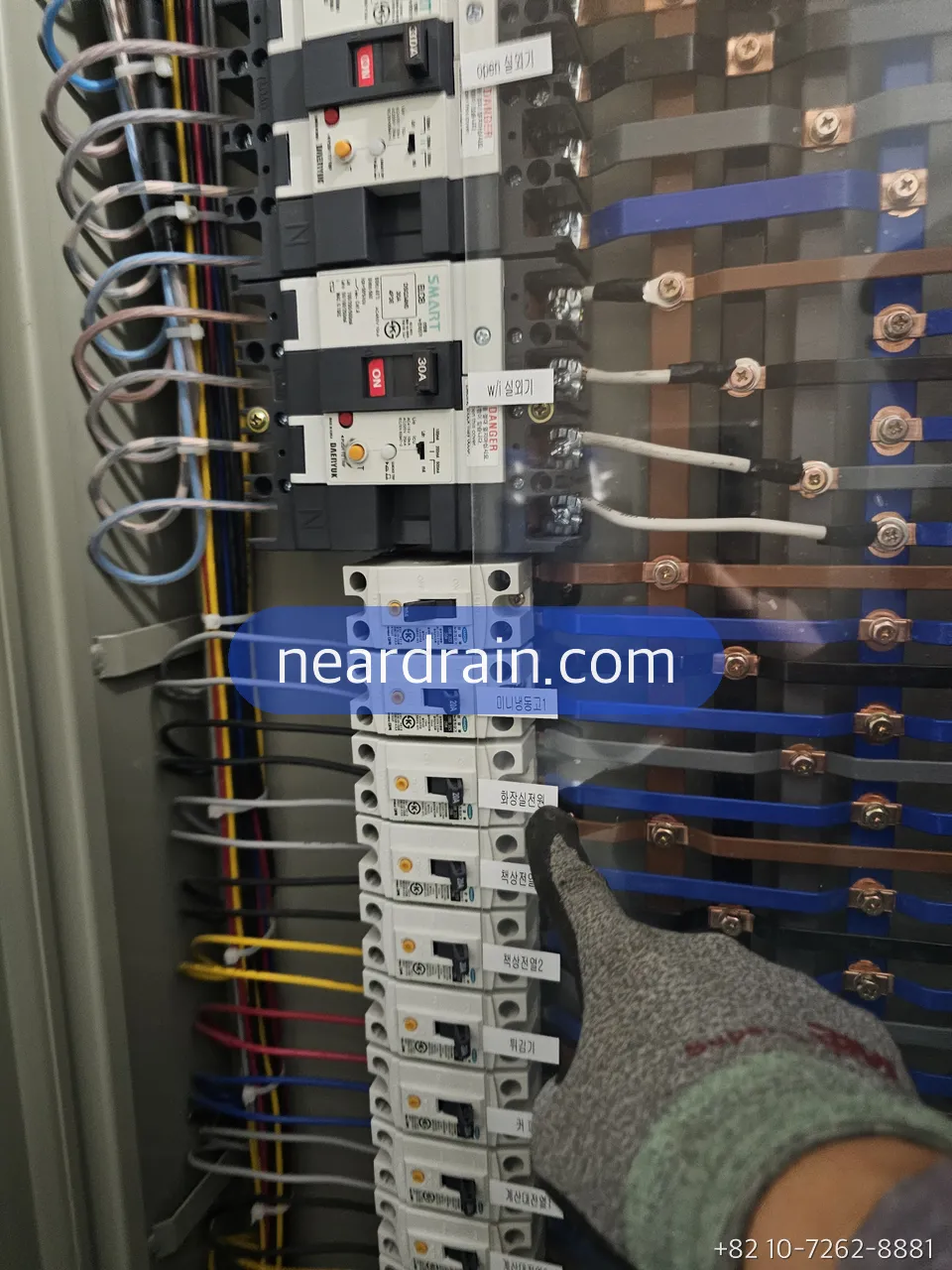
All three, in that order. The nameplate on the pump body or on the cable tag gives horsepower, voltage and phase, which decides which unit we bring. The open pit shows depth, the discharge pipe diameter, whether there is a union and check valve we can reuse, and how much sludge is in the bottom. The control box or breaker panel shows whether there is a float relay, an alarm, and whether the breaker has tripped. If you cannot open the pit safely, the hatch and the surrounding floor are enough to start.
Our landlord installed a cheap pump last year and it already failed. Why?
Three common reasons. A clean-water or drainage pump was fitted where a sewage pump was needed — it cannot pass solids and the impeller jams on the first wipe. The float was tied off short so the pump cycles every minute and burns out its capacitor. Or the check valve was skipped, so the pump lifts the same column of water back and forth all night. Bars and cafes are the worst case for all three, because the volume and the solids are commercial while the pump was chosen as if for a house. We put the pump spec in writing so the next argument about "cheap" has a document behind it.
Do you clean the pit as well, and what happens to the sludge?
Yes — the pit is pumped down and the settled sludge scooped out before the new unit goes in, because a new pump set on twenty centimetres of old grit fails early. The sludge from a lift pit is sanitary waste and leaves the site in sealed containers. What we do not do is empty a septic tank (정화조): that is a licensed septic hauler's job, and if your building has one below the pit, we tell you when it is due.
Related reading
Who pays for plumbing repairs in Korea — landlord or tenant?
How to call a plumber in Korea (when you don't speak Korean)
Why your Korean bathroom smells like a sewer — how to find the cause, in order
English by text (SMS) works best. Phone calls are fine in Korean or Japanese. Kitchen line also slow? See restaurant & cafe drain jetting — often the same visit.
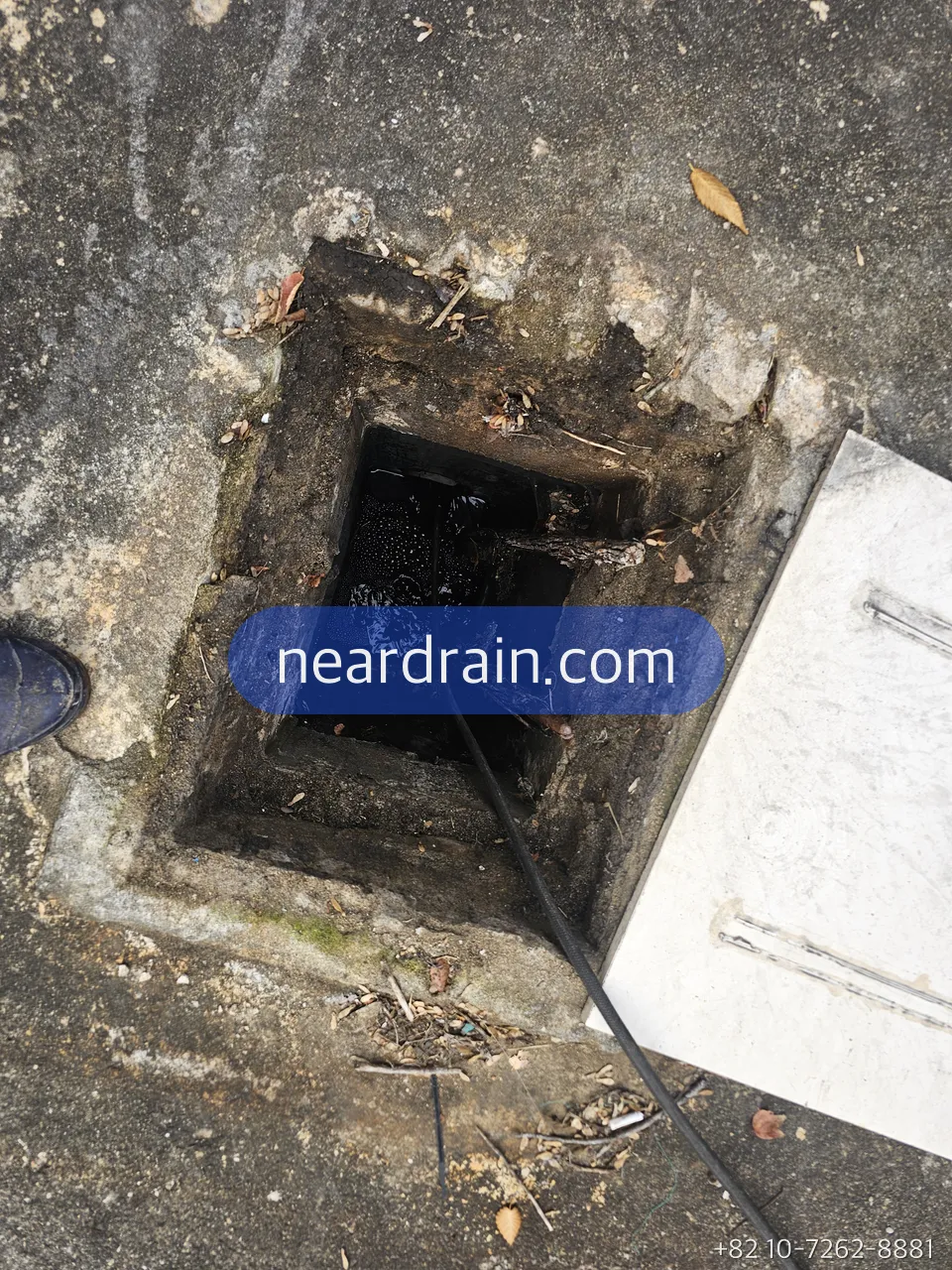
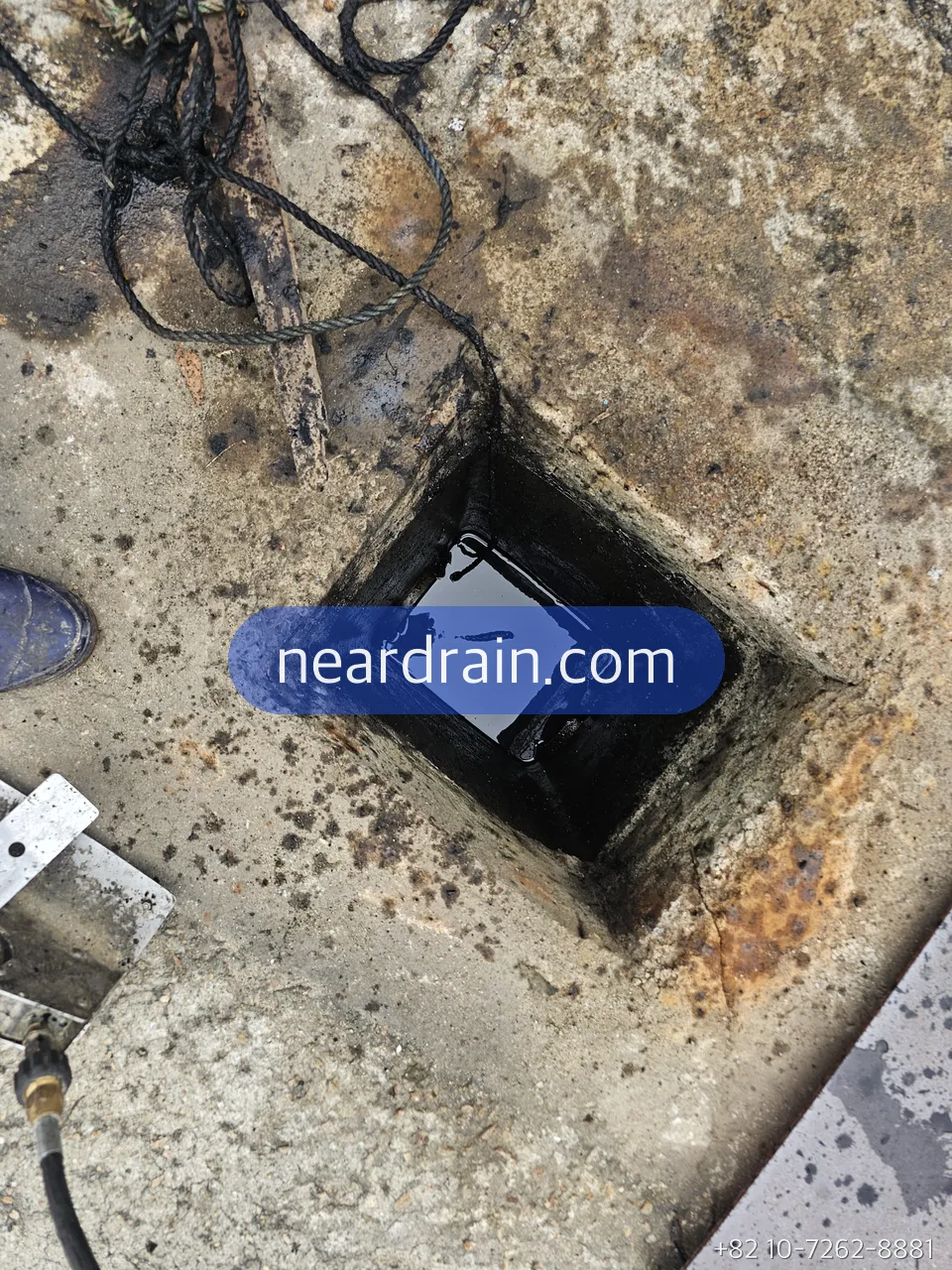
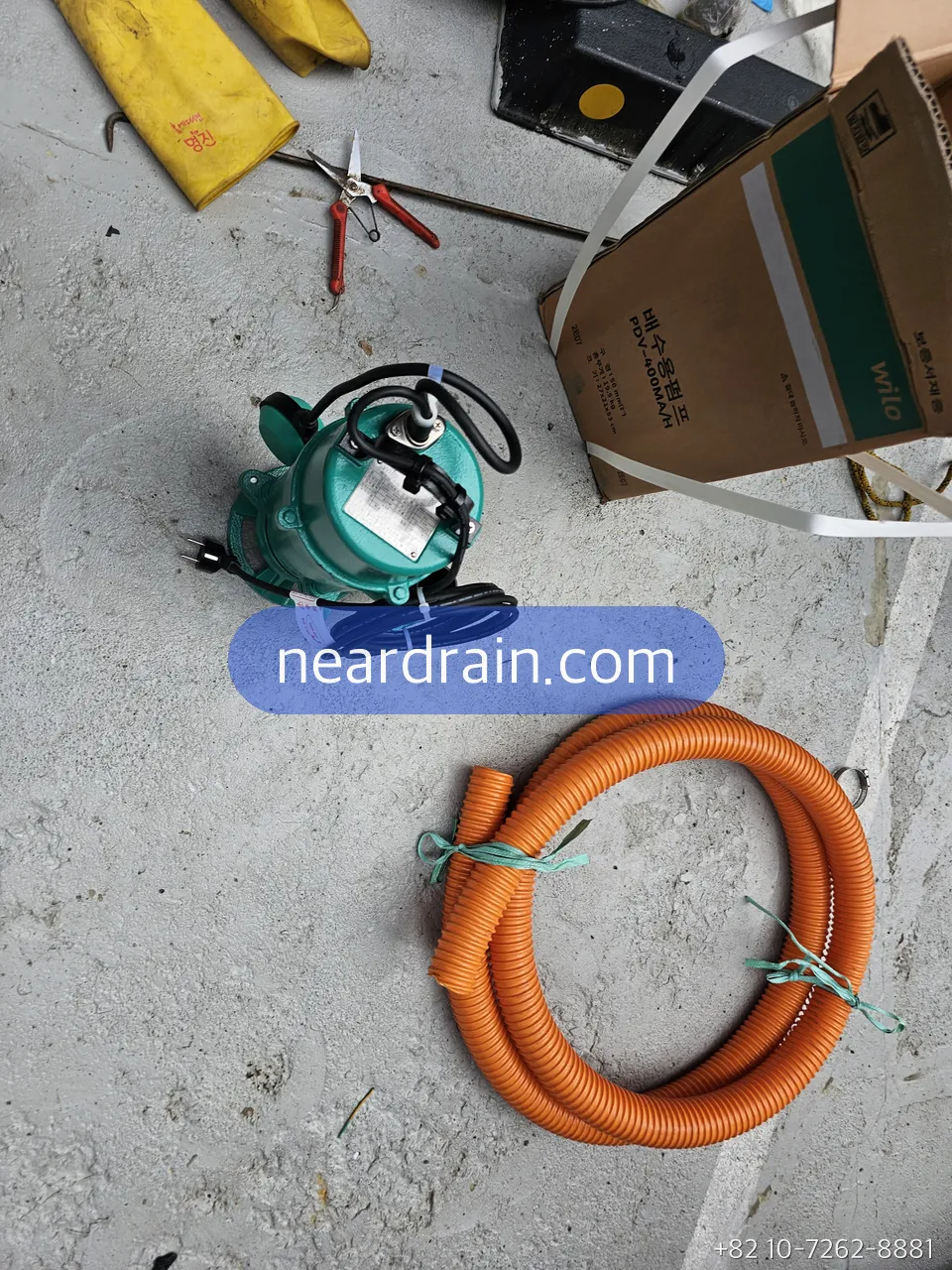
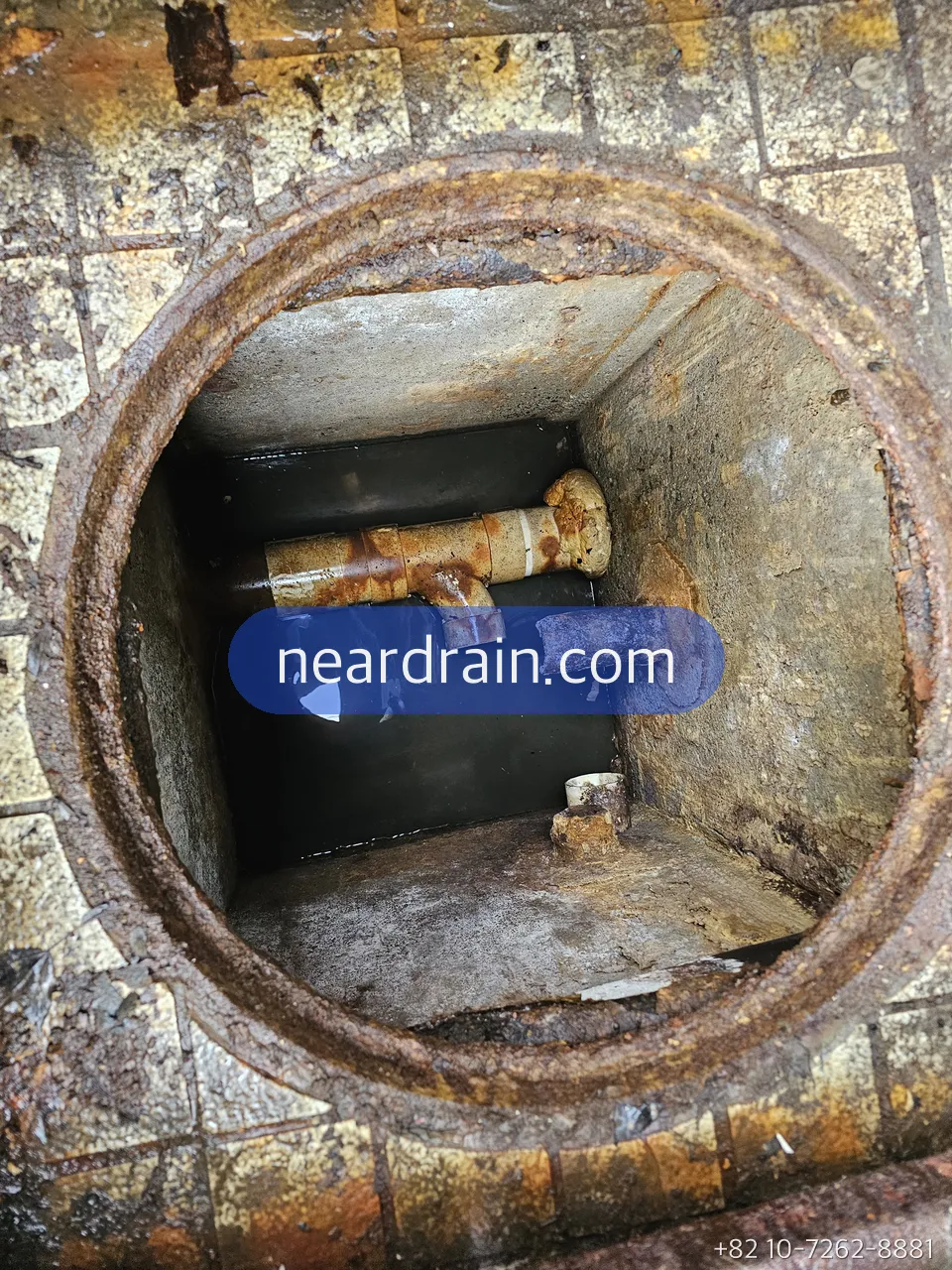
Lift-pit jobs from our own sites
No stock photos on this site — every image below was taken by our crew on a real call.