Home › Guides › Low water pressure
Weak shower, slow tap (수압 약할때): where Korean apartments lose pressure, in the order to check
Low water pressure in a Korean apartment (수압 약할때) has a short list of causes and a very specific order to check them in — from the parts you can unscrew with your fingers to the one valve that needs a plumber to the one pump that needs the landlord's signature. Work the list top to bottom and the answer usually appears before the expensive end.
One fixture or the whole unit? The sixty-second test
Open the kitchen tap on cold, full. Then the bathroom basin. Then the shower with the head off. If one is weak and the others are normal, the problem is in that fixture and the first half of this page is for you. If everything is weak — and the toilet tank takes minutes to fill — the problem is at the unit's inlet or the building, and skip to the second half. If hot is weak everywhere and cold is fine, skip to the boiler section at the end.
One fixture: the fixes you can do with your fingers
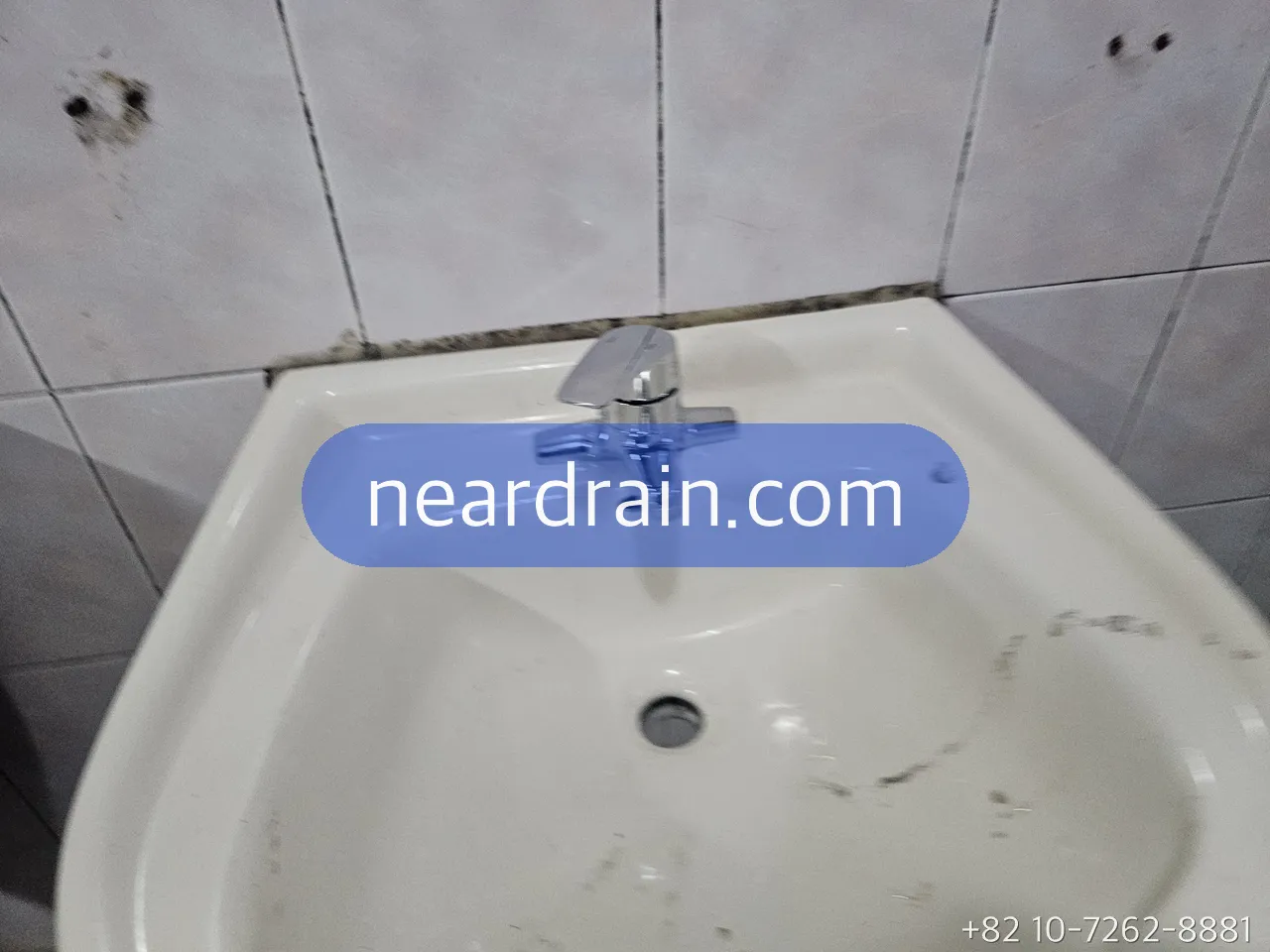
- The aerator. The mesh tip on a kitchen or basin tap unscrews by hand (or with a cloth and pliers). After any building pipe work, or in an older villa, it fills with grit and scale. Rinse it, soak it in vinegar if it is white with lime, screw it back.
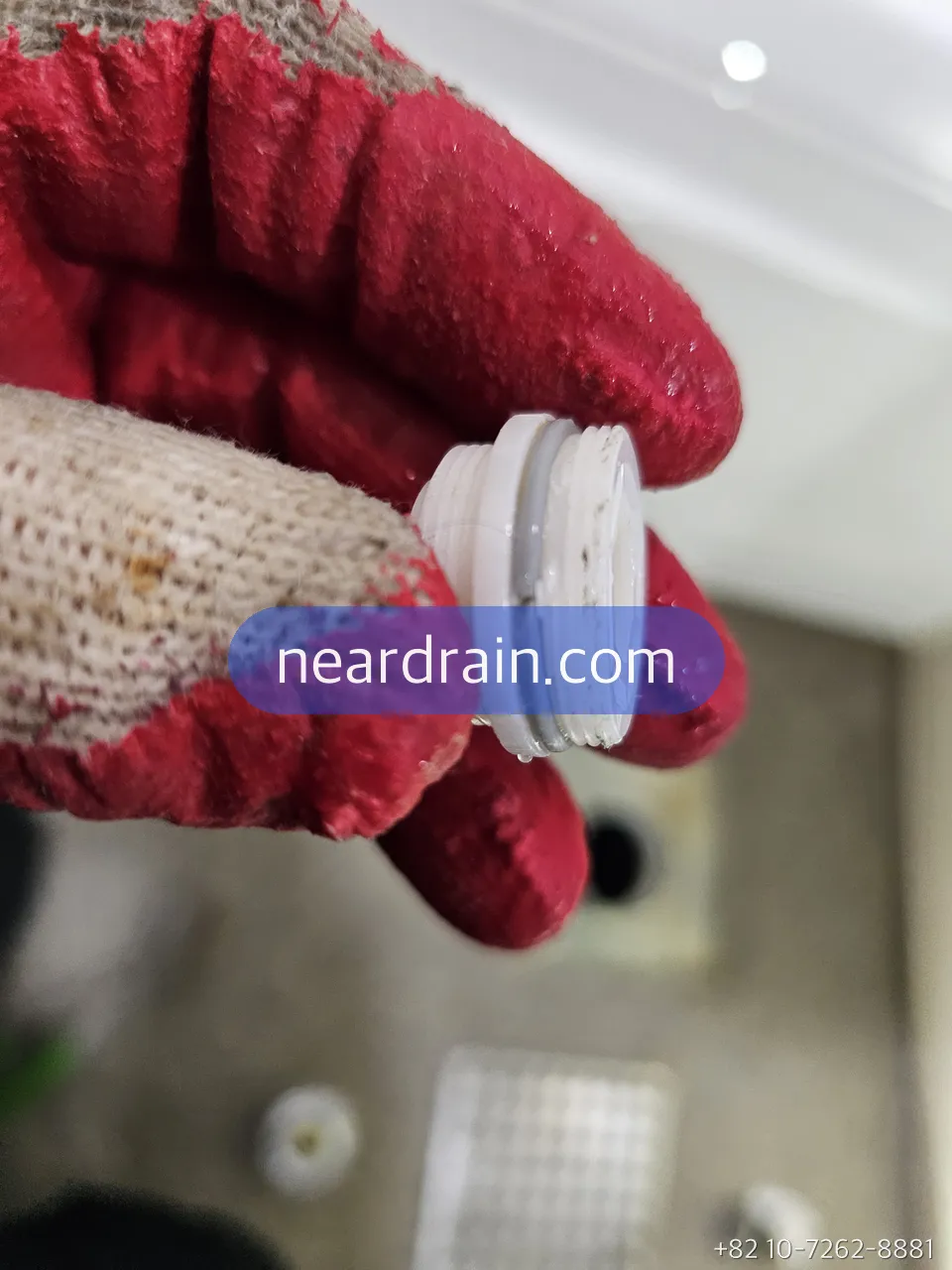
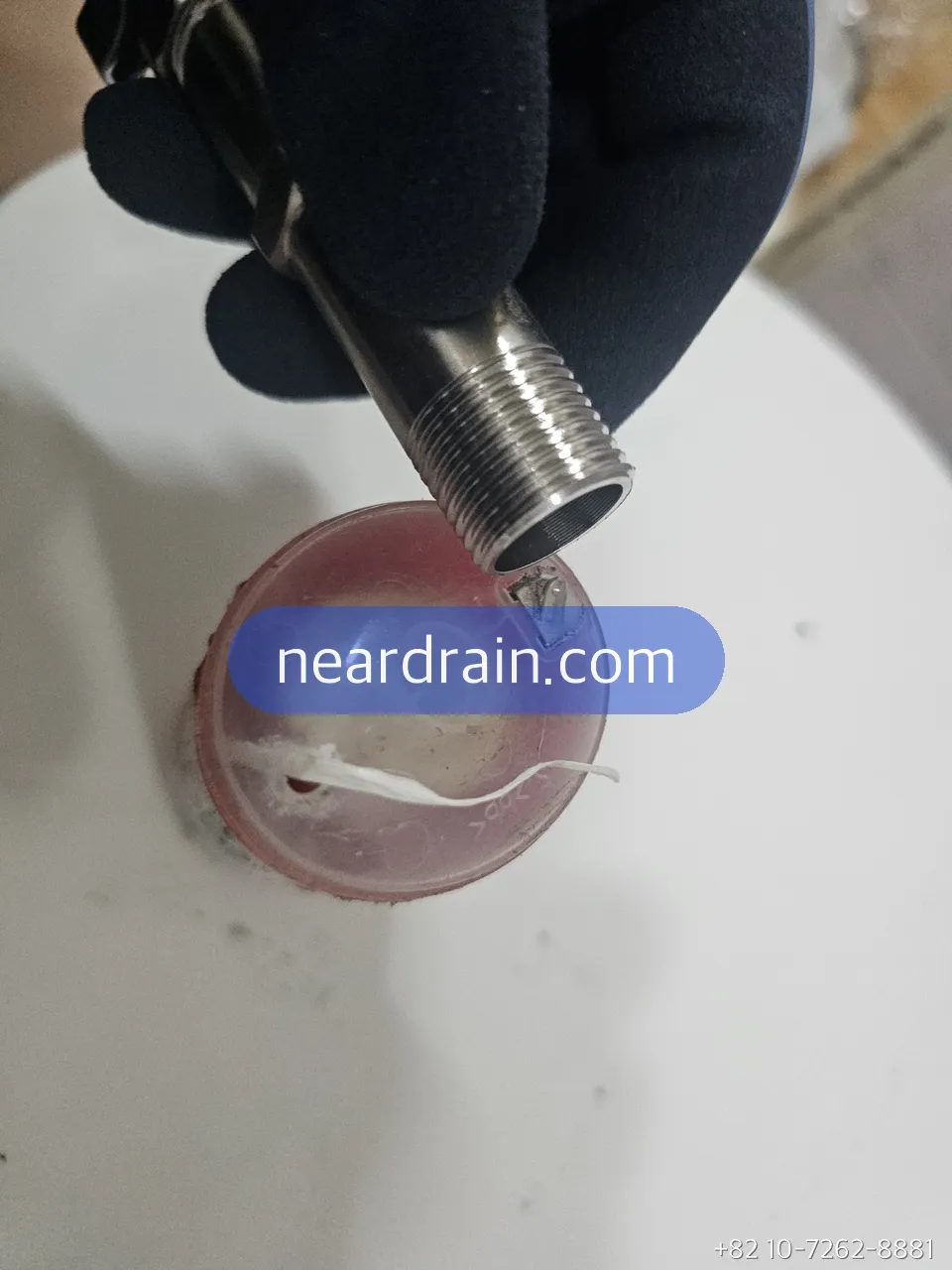
- The shower head filter cartridge (샤워 필터). Half the shower heads sold in Korea have a clear filter housing with a cartridge inside — the pink or white cylinder. It clogs on schedule; the packaging says months, the water says weeks. Replace it, or test with the head off entirely.
- The angle valve not fully open. Chrome, on the wall under the basin or behind the toilet. Someone closed it during a repair and reopened it halfway. Anti-clockwise until it stops.
- The mixer cartridge. If the bare hose is still weak and the basin next to it is strong, the cartridge inside the shower mixer has scaled or its inlet screens are blocked — often on the hot side only. This is where fingers stop and the faucet & fixture visit starts.
Whole unit, and it happened suddenly: the pressure-reducing valve, the meter valve, a frozen or scaled line
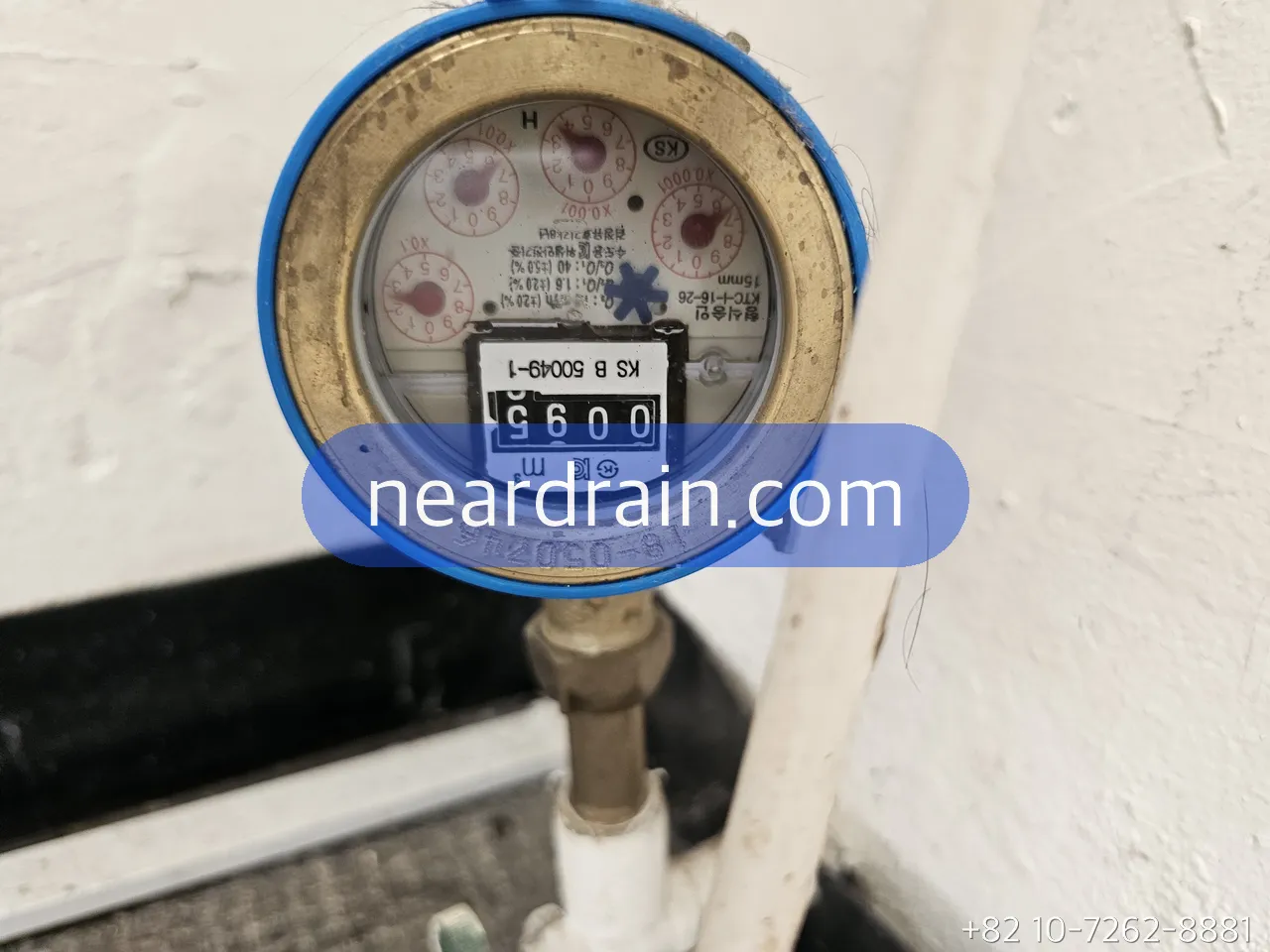
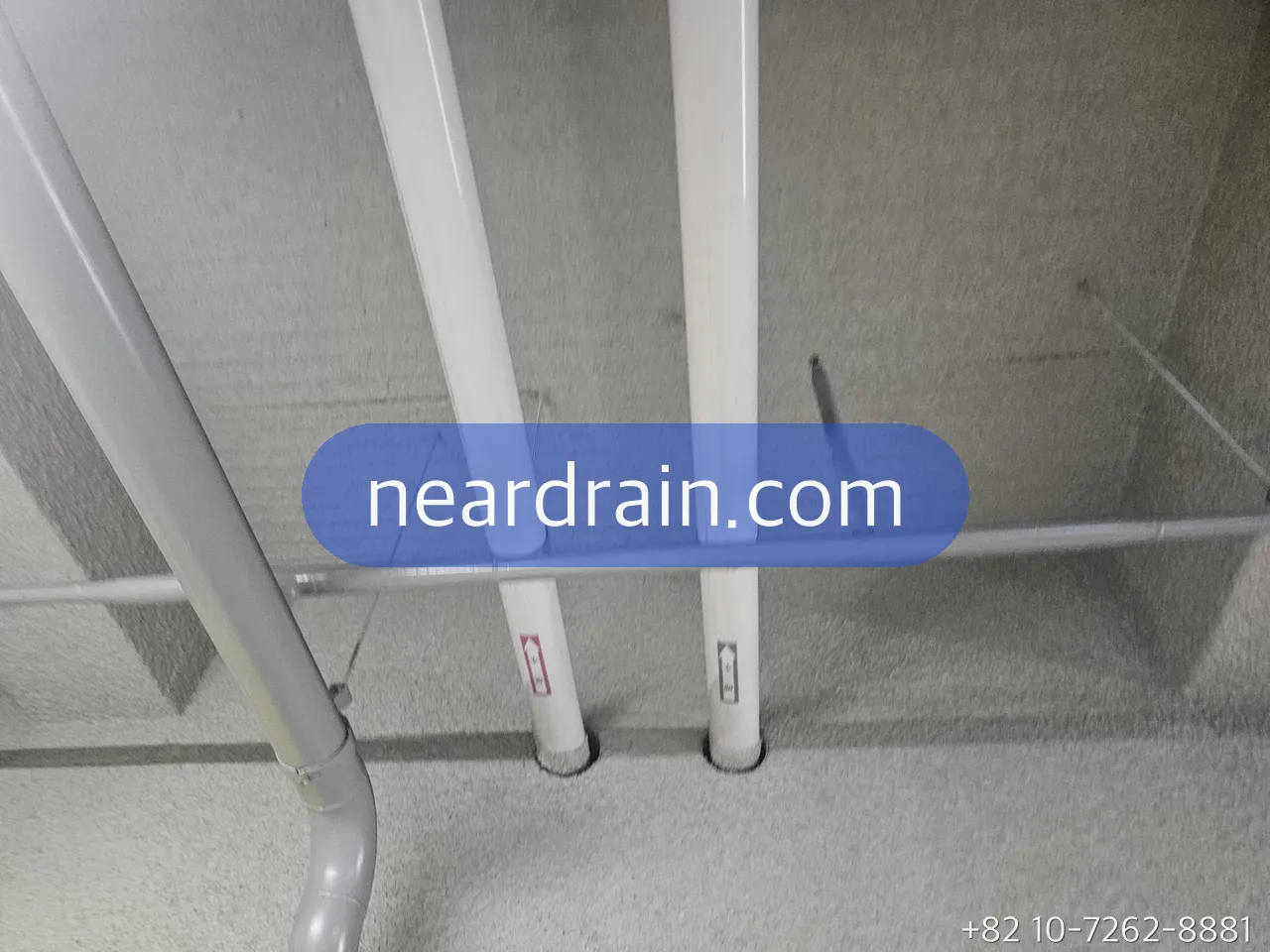
Newer apartments and most officetels have a pressure-reducing valve (감압밸브) at the unit's inlet, in the meter box or the utility shaft, because the building's booster set delivers more pressure than fixtures should see. When its spring or diaphragm fails, the valve drifts closed and every tap goes weak at once — and the symptom is often a week of odd pressure swings before the drop. It is a valve replacement, one visit, and we bring the common sizes. Two cheaper causes first: the meter valve left half-closed after a leak check or a neighbour's repair (open it fully and see), and in winter a partly frozen section on a balcony line — see the frozen pipes guide. A line that has scaled shut over years in an old villa shows as a slow decline, not a sudden one, and the meter valve test is the same.
Whole unit, and it has always been like this: building zones, top floors, officetel peak hours
A tall building splits its supply into pressure zones, and the top floors of each zone get the least. In a 1990s villa the "zone" is a rooftop tank filled by a small pump, and the top floor sits so close to the tank that gravity barely helps — a fourth-floor Itaewon or HBC flat with a limp shower is often exactly this. In a Gangnam officetel the supply is fine at 3 pm and thin at 8 pm because two hundred showers share one booster set. None of this is inside your unit, and none of it is fixed by a cartridge. What the management office (관리사무소) controls: the booster set, the zone valves, the rooftop tank pump and float. What to ask them, in Korean, before you pay anyone:
안녕하세요, ○○호입니다. 저녁 시간대에 세대 전체 수압이 많이 약해집니다.
건물 가압펌프나 감압밸브 쪽 문제인지 확인 부탁드릴 수 있을까요?
저희 세대 안 수전은 이상이 없는 것으로 확인했습니다.
That last line — "we have checked the fixtures inside the unit" — is what moves a management office from "call a plumber" to actually looking at the pump room.
The booster pump (가압펌프): when it is the right answer, and when it is not allowed
For a villa or a rooftop unit (옥탑방) on a gravity tank, a small booster pump on the unit's line after the meter is the honest fix and a common one — a pump the size of a shoebox, a pressure switch, a power point, mounted where it can be reached and heard as little as possible (on a balcony wall, in a utility cupboard, never above a bedroom). It needs the landlord's consent because it is a change to the building's plumbing, and it needs a check that the supply line can feed it: a pump pulling from a line that cannot supply it simply cavitates and dies. In an apartment complex the same pump is almost always refused, and rightly — the building already runs a pressure system, and one private pump on a branch pulls pressure from the neighbours on the same riser. We fit boosters where they belong and say no where they do not; the fitting is quoted on site after we have seen the line, the power and the mounting point.
Hot side weak, cold side fine: the boiler and the mixer
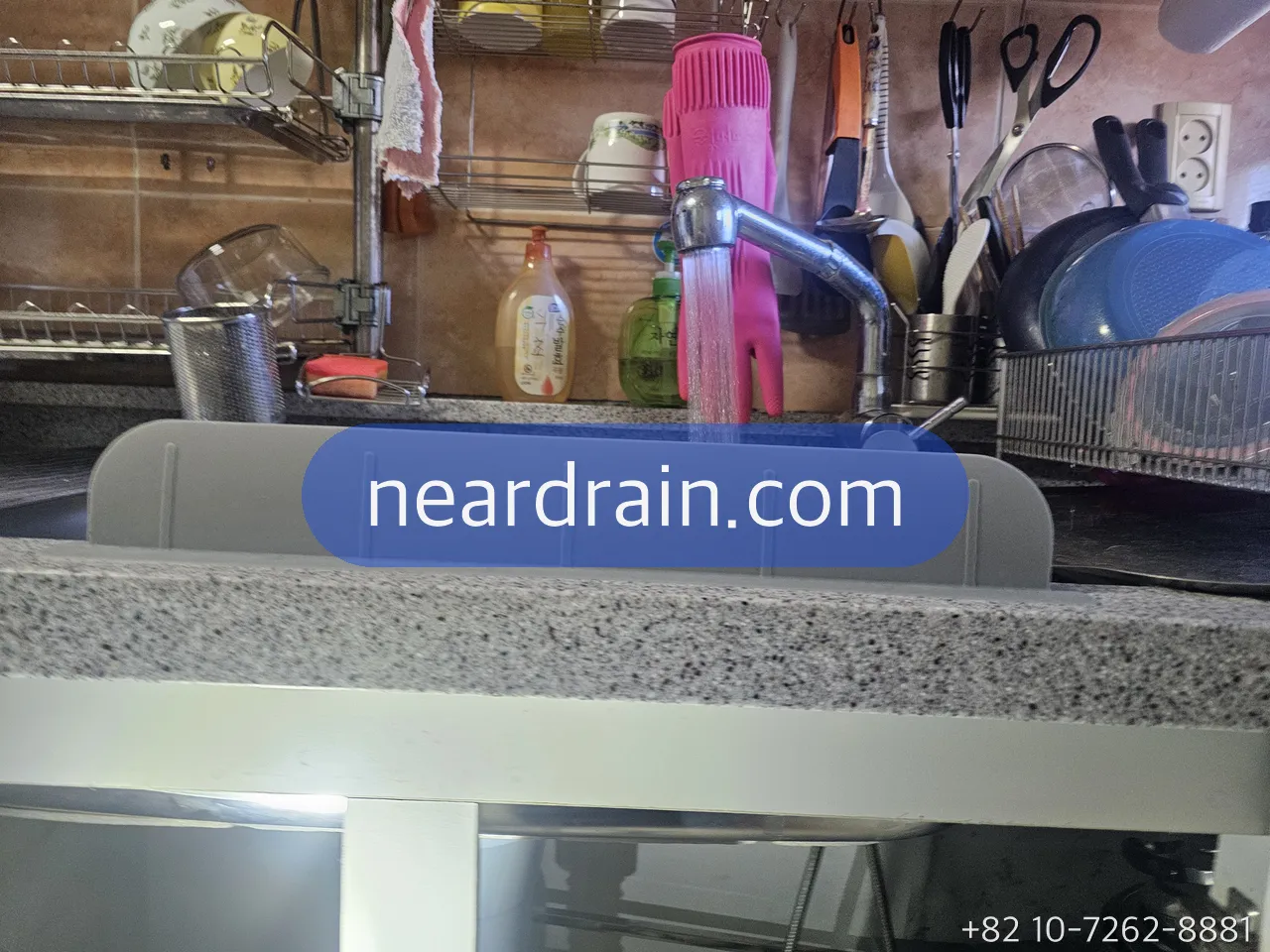
When cold water is strong everywhere and hot is weak everywhere, the restriction is between the boiler and the taps — usually the boiler's own hot-water heat exchanger scaled inside (a boiler AS visit, not ours) or an isolation valve on the balcony hot line left half closed (ours, and a two-second fix). When it is weak at one tap only, it is that mixer's hot inlet. The full split between boiler company and plumber is in the no-hot-water guide.
Renters: the three questions before paying anyone
- Is it one fixture or the whole unit? (The sixty-second test.)
- Has the management office confirmed the building's pressure is normal at my floor? (The Korean message above.)
- Has the landlord agreed in writing to a valve replacement or a booster pump before it is fitted?
A cartridge or a shower filter is a small repair that most landlords leave to the tenant; a pressure-reducing valve or a pump is the building's fabric and normally the landlord's cost. The who-pays guide has the reasoning.
Questions people ask from a weak shower
Pressure drops every evening in my officetel. Can you fix that?
Inside your unit, partly; at the building, no. An evening drop that hits every tap at the same hour is the building's supply being shared by two hundred showers at once, and the fix — a larger booster set or re-zoning the risers — belongs to the management office. What we can do in the unit is make sure nothing of yours is adding to it: a scaled cartridge, a half-open angle valve, a clogged shower filter. Those raise the floor of what you get at 8 pm; they do not change the ceiling.
Only the shower is weak. Do I need a plumber?
Not yet. Unscrew the shower head and run the hose bare: strong flow means the head or its filter cartridge is the problem, and a new head or a rinsed filter is the fix. Weak flow from the bare hose means the mixer — cartridge or the hot-side eccentric choked with scale — and that is a visit. Ten seconds of testing saves a call-out either way.
Can I install a booster pump in a rented villa?
With the landlord's written consent, usually yes — it is a small pump on the unit's supply line after the meter, it needs a power point, and it is removable. Without consent, no: it is a change to the building's plumbing, and a pump fitted without approval is the tenant's liability if it fails or annoys the neighbours. In an apartment complex the answer is nearly always no, because the building already runs a pressure system and a private pump on one branch upsets it.
The building replaced a pipe and now my pressure is low. Related?
Very likely. Pipe work sends grit and scale downstream, and the first places it lands are the aerator screens, the shower filter and the inlet screen of the toilet fill valve. It also often ends with someone not fully reopening the meter valve or a riser isolation valve. Clean the screens, check the meter valve is fully open, and if it is still low, ask the office whether a pressure-reducing valve was fitted or adjusted during the job.
Will a bigger shower head help?
Usually the opposite — a rain head needs more flow to feel like anything, and on a weak supply it becomes a wide, gentle drizzle. If the problem is the head or the filter, a new standard head helps. If the problem is the supply, a smaller head with fewer holes is what makes the water feel stronger. Our shower faucet guide covers what fits on a Korean wall mixer and what a rain head needs.
Worked the list and it is still weak? Send the tap, the meter box and the building
Three photos: the weak tap running, the inside of the meter box, and the building from the street. From those we can tell a cartridge from a valve from a zone problem, and whether the visit is ours or the management office's. Quoted on site before work. Calls and texts taken any time.
Pressure calls from our own sites
No stock photos on this site — every image below was taken by our crew on a real call.