Home › Guides › Leak into the unit below
The downstairs neighbour says water is coming through their ceiling. Here is the order of things.
Water leaking into the apartment below (아랫집 누수) is the call that arrives with a knock on the door rather than a text — and for a foreigner in Seoul it comes with three unknowns at once: is it even you, what does the neighbour expect, and what is this leak report (누수 소견서) everyone keeps mentioning? This page is the sequence, from the first hour to the insurance envelope, written by the crew that does the detection and writes the report. It stays out of legal advice and out of sums; it is about order, record and what gets written down.
Day one, in order
- Stop what you can. No washing machine, no bath, short showers or none in the bathroom above their stain, no mopping the wet-room floor with a bucket. If the stain is under your kitchen, no dishwasher. This costs you nothing and it is the first thing the neighbour will ask whether you did.
- Photograph your floor and their ceiling, with the date. Your bathroom floor dry, the balcony, under the sink; then, if the neighbour lets you in, their ceiling stain from a metre away and close up, and the room it is in. Phone photos carry the timestamp — do not edit them.
- Write it down. A one-line note to yourself: date, time the neighbour knocked, what they said, what you turned off. Memory drifts by the time an insurer asks.
- Notify the landlord and the management office in Korean. Copy this, change the unit numbers:
안녕하세요, ○○호 세입자입니다. 아랫집(○○호)에서 천장으로 물이 샌다고 연락이 왔습니다.
저희 집 물 사용은 지금 중단했고, 사진을 첨부합니다.
누수 원인 확인(누수 탐지)이 필요할 것 같은데, 진행 방법을 상의드리고 싶습니다.
That message does three things at once: it dates your response, it shows you stopped using water, and it puts the decision about detection where the lease usually puts it — with the landlord.
Is it even you? How we rule floors in and out before opening anything
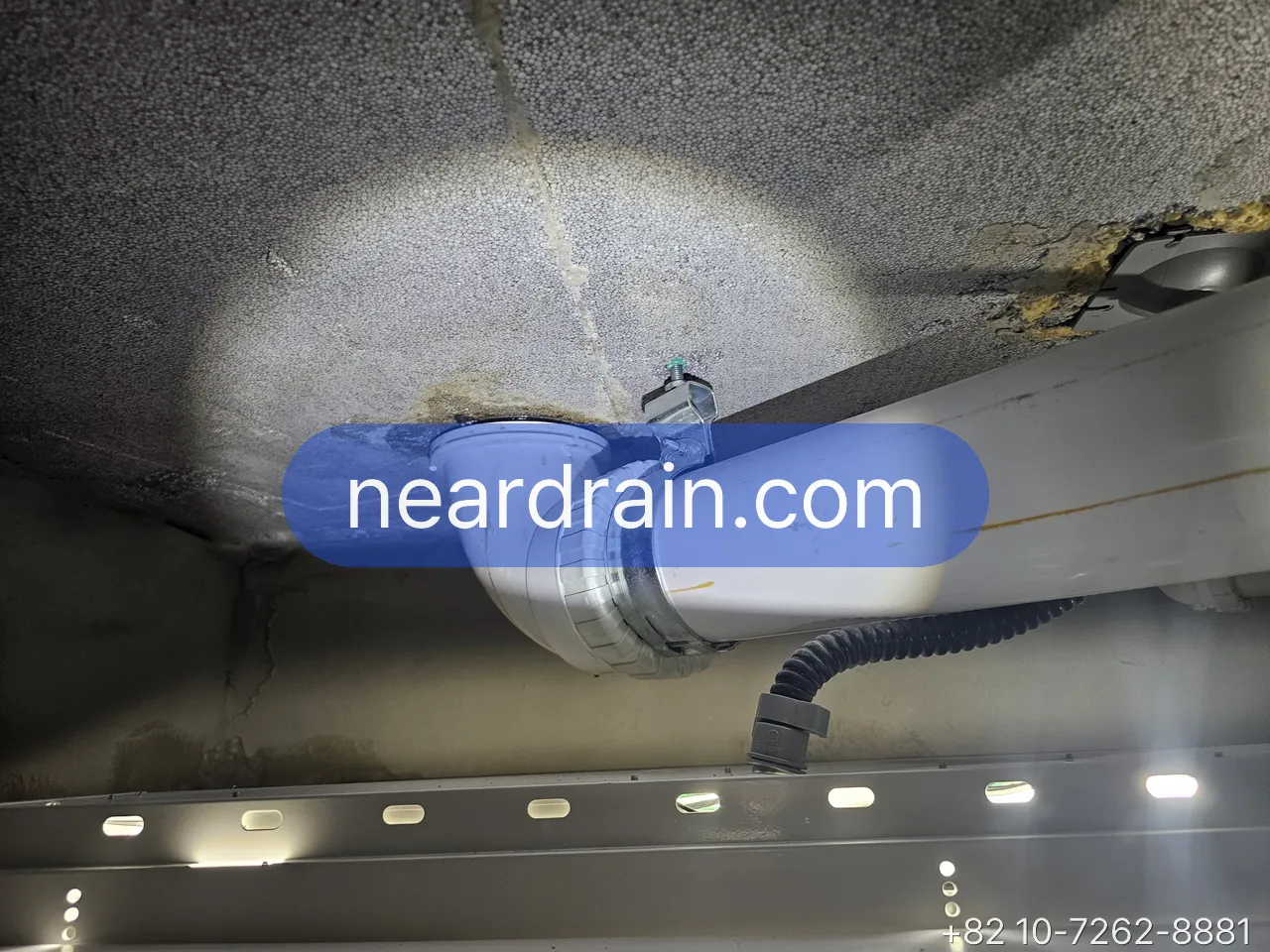
A stain on a ceiling is not proof of the unit above it. Water runs along slabs and pipe chases and comes out where it finds a gap, so the source can be the unit above, the unit above that, the shared riser in the wall behind the bathroom, the balcony rain line, or the roof. Before anyone's tile is touched we work through it:
- Pattern. Does the stain grow after showers, after rain, or steadily in all weather? Shower means a wet-room floor or a drain joint; rain means the rain line or the roof; steady means a pressurised supply or heating line.
- Position. A stain under your bathroom is one thing; a stain under your bedroom, where no pipe runs, points to a riser or a slab route from further away.
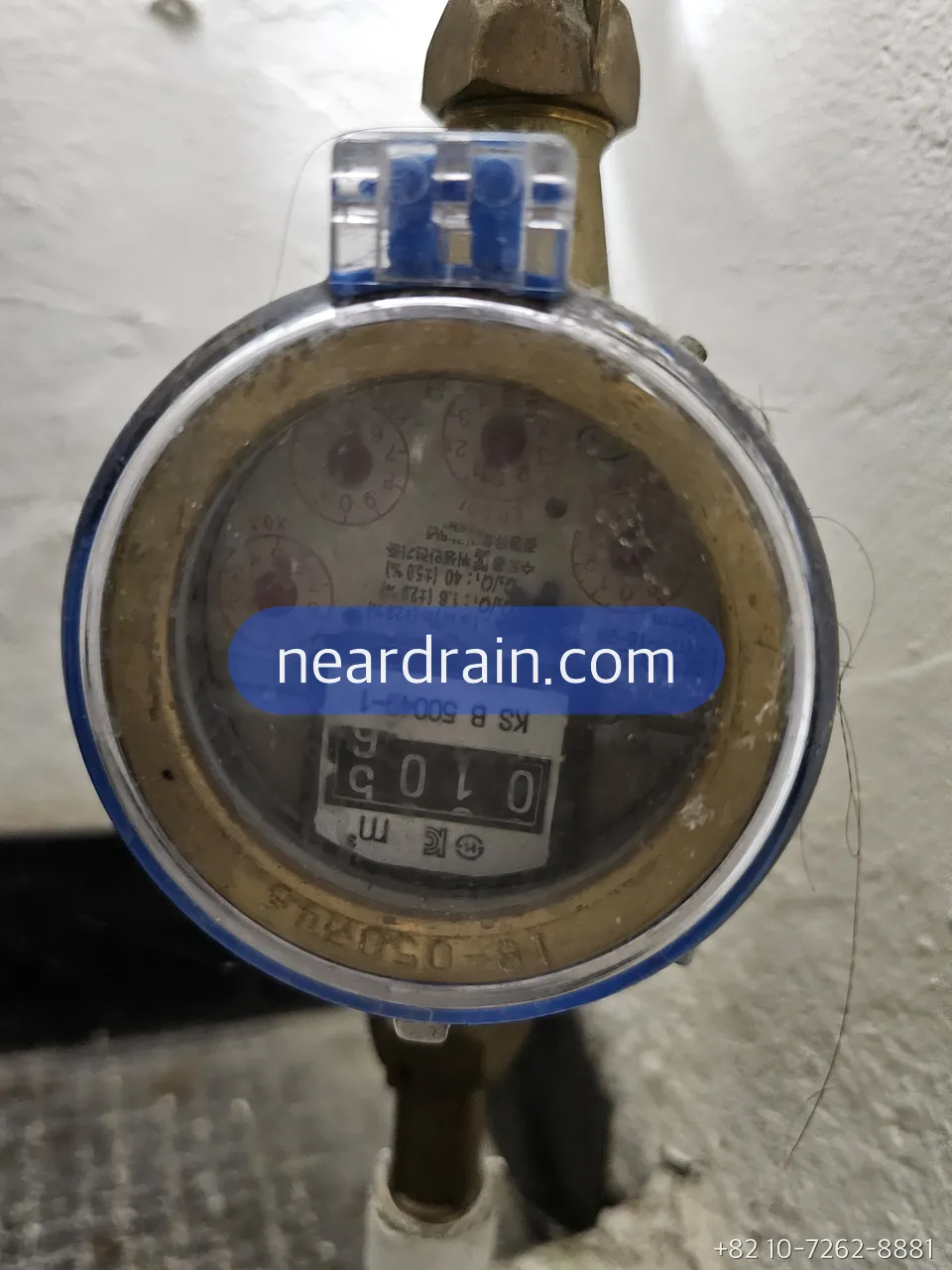
- Meter stillness. Every tap in your unit closed, the meter watched: a dial that moves is a supply leak somewhere in your unit. A dial that does not move rules out your supply lines in a single step.
- The riser. Shared drain and supply risers run in the wall between bathrooms floor to floor; a stain near the riser wall that appears when the neighbour above you uses water is the building's, not yours.
We tell you which of those it is before the detection equipment comes out, because a leak that is the building's should be booked and paid for by the management office, not by you.
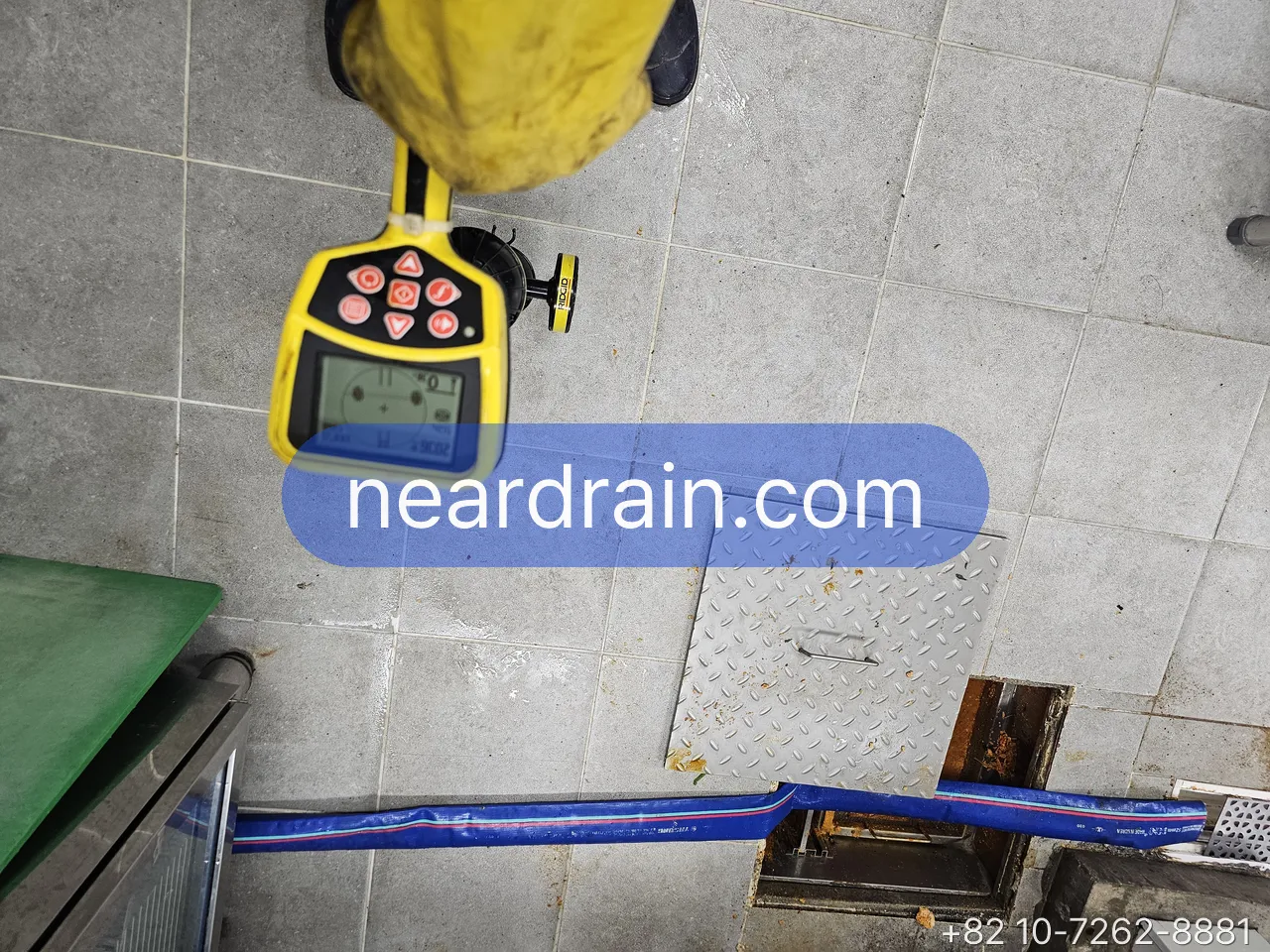
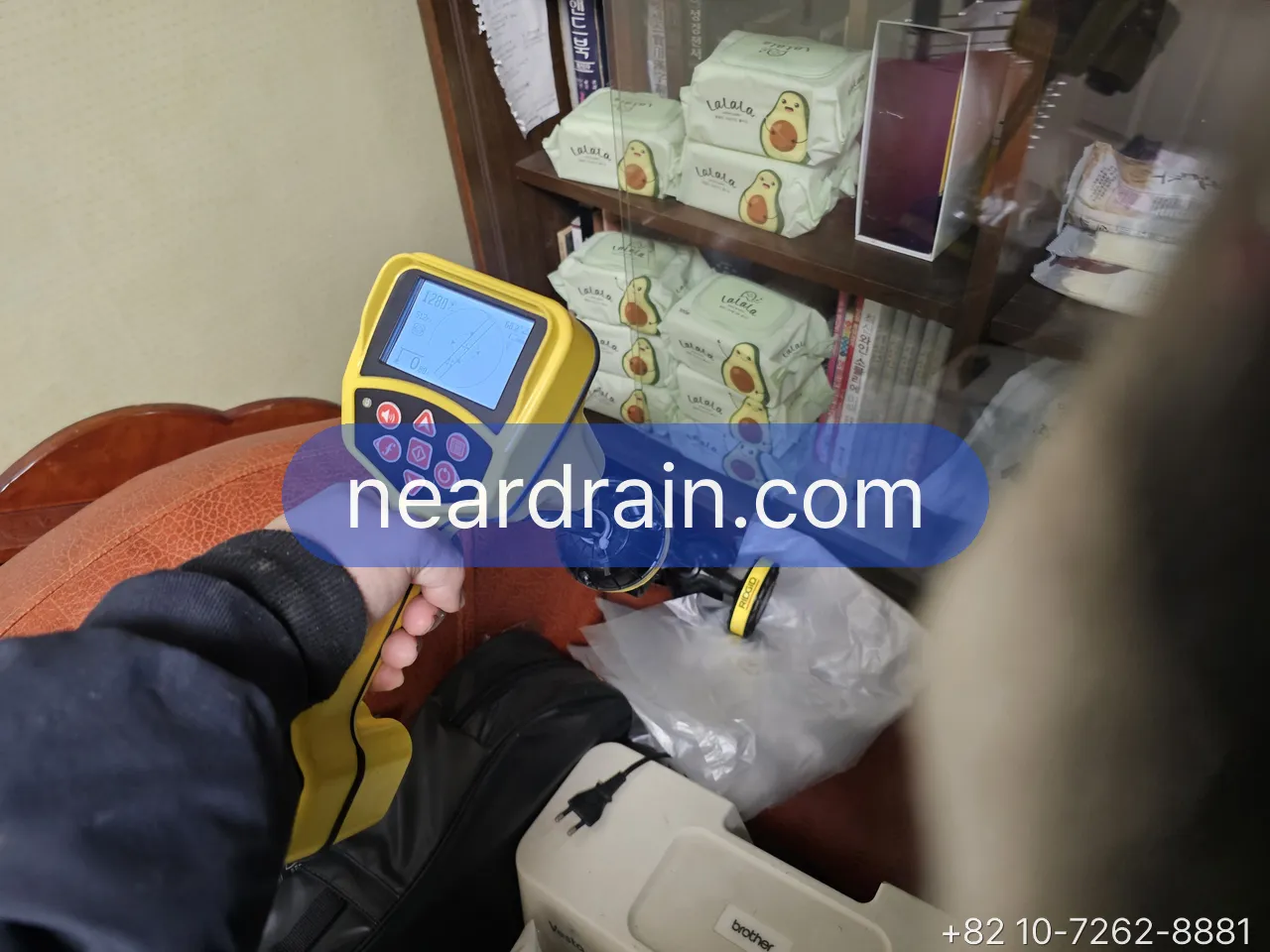
The detection visit: pressure test, listening, thermal camera, dye — walls stay closed
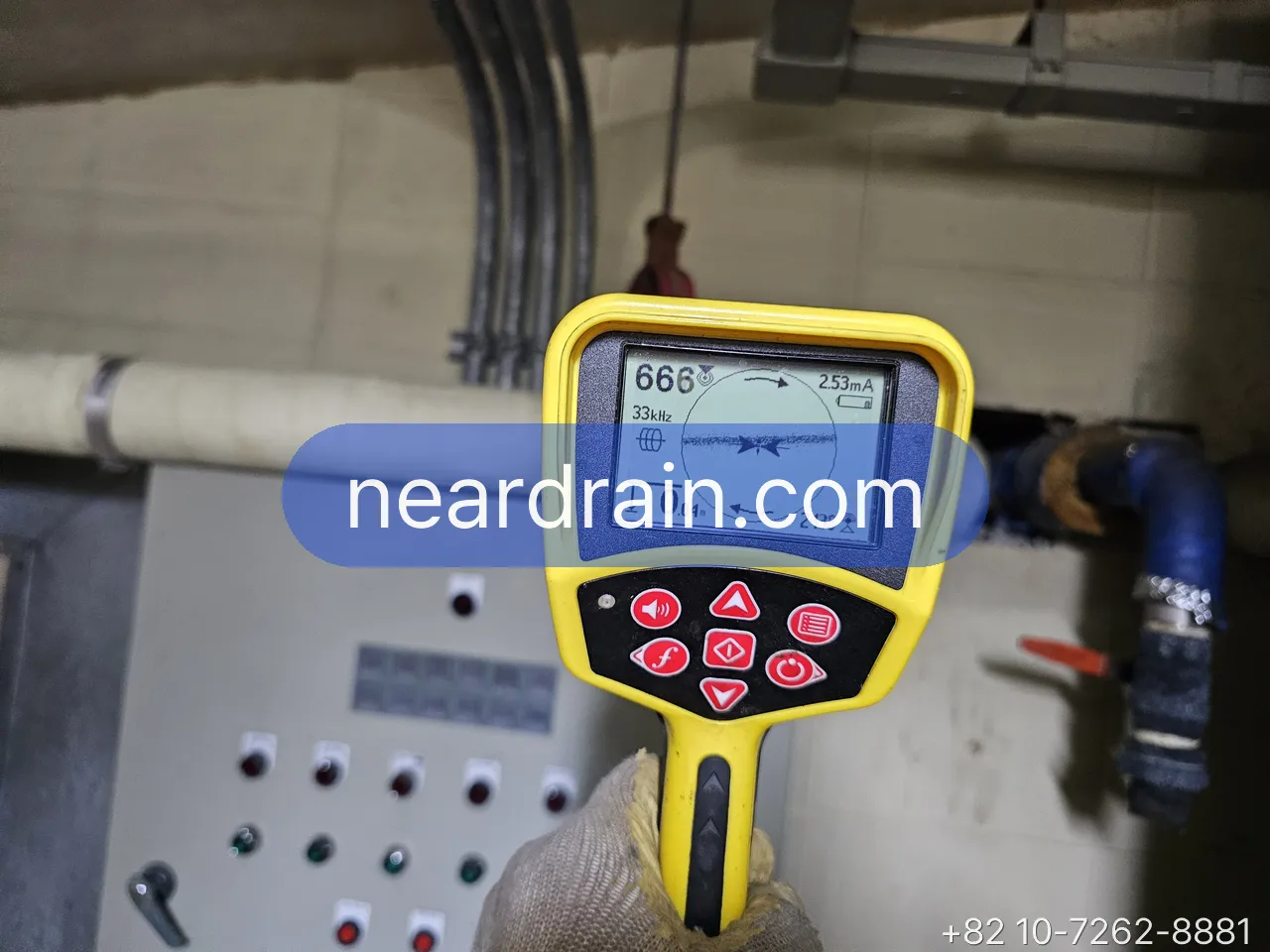
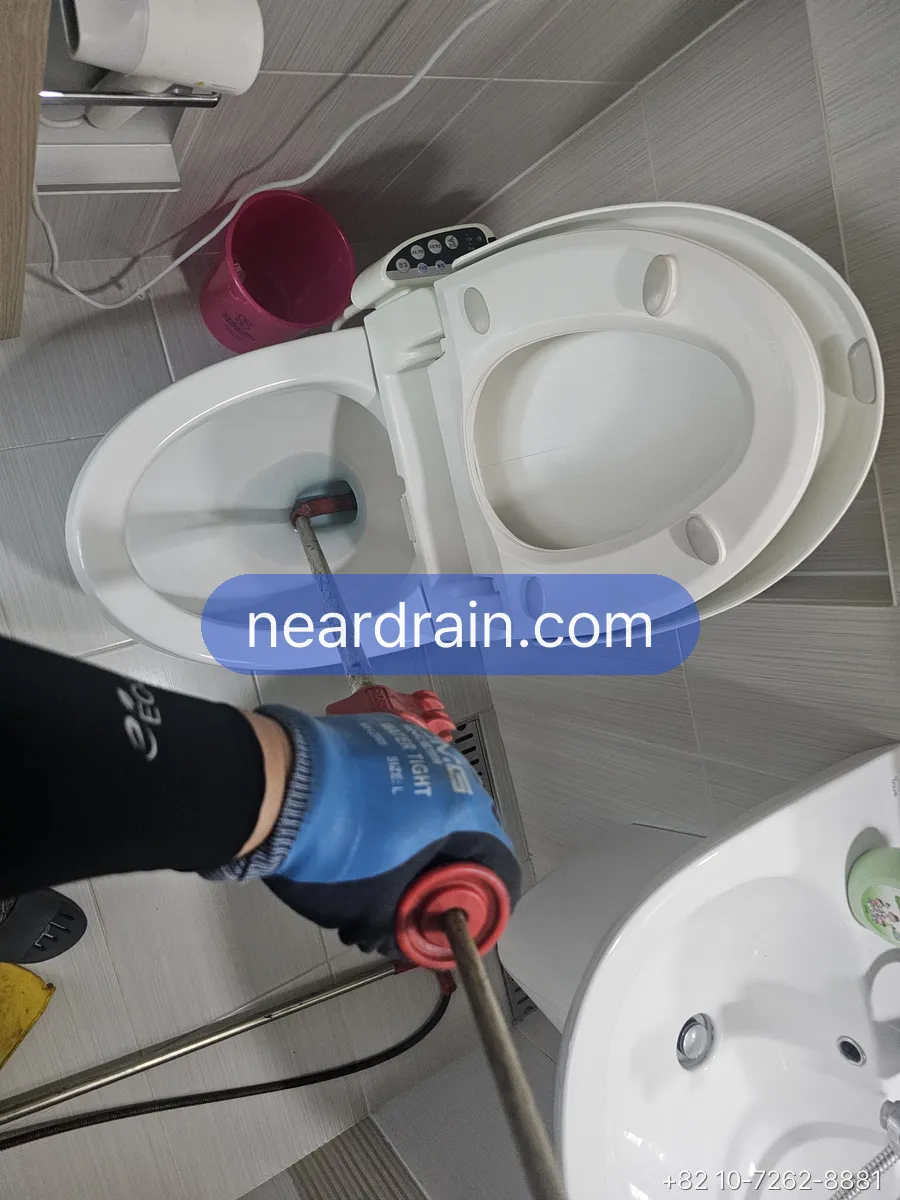
With the source narrowed to your unit, the visit works from the least invasive method up. Supply and floor-heating (온돌) loops are isolated and put under pressure one at a time; a loop that will not hold pressure is the leaking one. Acoustic listening on the tile follows the sound of the escape to a point. A thermal camera shows the warm track of a hot-water or heating leak under the floor. Coloured dye in the wet-room floor drain and the shower tells us whether the floor's waterproof layer or a drain joint is passing water rather than a pipe. Nothing is opened until the point is marked, and the marked point is photographed with a tape measure from two walls so the repair — ours or someone else's — opens one tile, not a floor. The method in detail is on the water leak detection service page.
What the leak report (누수 소견서) contains — and who asks for it
The report is a one- or two-page document, in Korean with an English summary, that states what we found and how. It contains:
- Location — the unit, the room, the marked point with measurements from two walls, and a floor sketch.
- Line type — cold supply, hot supply, floor-heating loop, drain joint, wet-room waterproofing, or rain line.
- Cause as observed — corrosion pinhole, a failed joint, a cracked fitting, a floor membrane that has parted at a drain, a frozen-and-split section. Observation, not speculation.
- Evidence — the meter stillness result, the pressure readings by loop, thermal images, dye result, and the photos of the exposed point after opening.
- Dates — of the neighbour's first report as you gave it to us, of the detection visit, of the repair if we did it.
- Company details and the technician's licence — the part the insurer checks first.
Who asks for it: the neighbour's or your insurer, the landlord who has to decide on the repair, the management office when the cause touches a shared line, and occasionally a buyer's agent years later when the flat is sold. What the report does not contain is a verdict on who pays or an estimate of the neighbour's damage — those are for the parties and their insurers, and a report that strays into them is worth less, not more.
The daily-life liability insurance (일상배상책임보험) route
Many Korean household, fire and even car policies carry a daily-life liability rider (일상생활배상책임) that responds when water from your unit damages a neighbour's. Whether yours does, and what it covers, is a question for your insurer or your landlord's — but the sequence they ask for is consistent enough to prepare for. They typically request: the neighbour's dated photos and a description of their damage; your photos from day one; the leak report with the cause and the location; the repair invoice with the tax receipt; and sometimes a photo of the repaired point. Two things we can state in the report because we observed them — the location and the cause — and two things we cannot: that the neighbour's damage was entirely from this leak, or what it should cost to put right. Send the insurer the whole set in one message, in the order above.
Tenant, landlord, or upstairs: the usual order of contacts, not a verdict
The pattern we see in Seoul leases, offered as sequence rather than law: the tenant reports and stops the water; the landlord decides on detection and normally carries the cost of finding and fixing a leak in the building's pipes and floors; where the cause is a shared riser or the roof, the management office or the building's owners carry it; and where the cause turns out to be the unit above you, the same chain starts one floor up. The tenant's own liability tends to enter only when the leak came from something the tenant did — a washing machine hose left unclamped, a bath left running — which is exactly why the day-one photos of your own unit matter. The longer version, including how jeonse and wolse differ in practice, is in who pays for plumbing repairs in Korea.
After the point is found: repair options on site, waterproofing referred out, re-test before closing
With the point marked and opened, we explain the options in front of it: a section replacement on a supply line, a re-made joint on a drain, a re-run of a short heating loop. Some pipe materials and some repairs belong to another trade, and we say which — a failed wet-room membrane is a waterproofing (방수) job, tile and wallpaper are the finishing trades, and we do not pretend otherwise to keep the work. Whichever route is taken, the repaired line is pressure-tested again before the floor is closed, and that re-test result goes into the report. The neighbour's ceiling is repaired last, after the stain has stopped growing for a week — a ceiling painted too early stains again and reopens the whole conversation.
Questions people ask after the knock on the door
Downstairs wants money today. What should I say?
That you are taking it seriously, that you have stopped using water in the room above their stain, and that a detection visit is being booked so the cause and the source are on paper before anyone talks about figures. Put that in a message, in Korean, with the date. Nobody can sensibly settle a ceiling repair before it is known whether the water came from your unit, the shared riser, or the roof — and the downstairs neighbour's own insurer, if they have one, will ask for exactly that record.
I rent. Do I call my landlord or a plumber first?
Landlord first, by message, with the photos and the time — because in a Korean lease the landlord is the party who normally books and pays for locating a leak in the building fabric, and a tenant who arranges work without telling them can end up carrying it. Then the management office if you are in a complex. Then us. In practice the landlord often asks the tenant to make the booking; that is fine as long as the message trail shows who authorised it.
Can you write the report in English and Korean?
Yes. The leak report (누수 소견서) is written in Korean because the insurer, the management office and the neighbour read it in Korean, and we attach an English summary of the same points — location, line type, cause, evidence photos, date — so you know what you are handing over. The Korean version is the one that carries weight; the English one is so you are not signing something you cannot read.
The leak stopped by itself — do I still need detection?
Usually yes, and here is the honest reason: leaks that stop on their own are almost always intermittent, not healed. A hairline in a hot-water line opens when the line is hot and closes cold; a wet-room floor leaks only when the shower runs long enough to pool; a balcony rain line leaks only in rain. The downstairs ceiling dries, then stains again next month, and by then the neighbour is less patient. A stillness test on the meter and a pressure test on the lines take an hour and settle whether it is over.
How long does the insurance side usually take?
We can only speak to our part: the detection visit is usually one day, the report goes to you within a day or two after, and the repair follows once you and the landlord decide on the option. What the insurer then does with the report, and how long they take, is theirs — but the claims we hear back about move fastest when the report, the dated photos and the neighbour's photos were all sent together in one message rather than trickled in.
Send us the two ceilings
Your floor, their ceiling, the meter with every tap closed. From those we say which floor and which line are likely, whether the management office should be involved before you spend anything, and what a detection visit would cover. The figure is confirmed on site before work begins. Calls and texts taken any time.
Detection work from our own sites
No stock photos on this site — every image below was taken by our crew on a real call.